Start with the clothes your child wears now
Children’s clothes can pile up quietly: a sweater that was roomy last winter, shorts bought for later, and a favorite shirt that has become too small. Before buying bins or rearranging a closet, gather the clothes your child currently wears and make room to look through them. You do not need to empty every drawer in the house. One child, one drawer, or one clothing type at a time is enough.
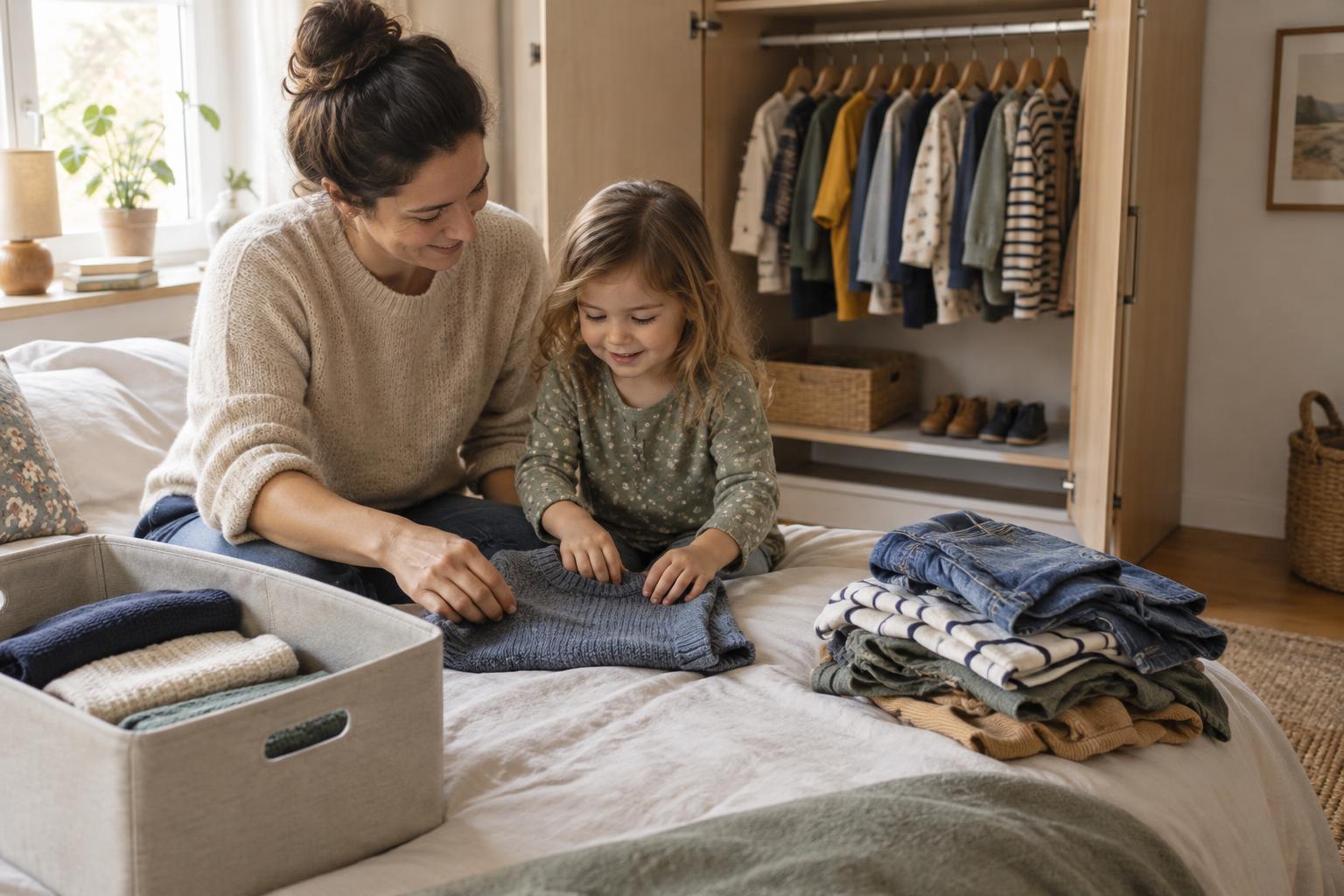
Sort pieces into three groups: ready to wear, worth checking again soon, and ready to leave the everyday space. Try on uncertain items when your child is willing, rather than relying only on the size printed on a label. Look for comfortable movement, appropriate coverage and closures your child can manage at their current age. A child may fit one brand’s trousers and have outgrown another brand’s pair marked with the same size.
Make a small, usable seasonal wardrobe
Keep the clothes suited to the current weather and your family’s routine in the easiest places to reach. Put frequently worn tops, bottoms, socks and layers where you can find them without shifting stacks of special-occasion outfits. For weather that changes during the day, leave a few adaptable layers available even when you rotate the rest of the season’s clothes into storage.
It helps to think in outfits rather than individual pieces. If several tops work with the same few bottoms, getting dressed takes less sorting. Check whether your child has what they need for ordinary days before focusing on an exact number of items. Laundry habits, outdoor play, school or childcare arrangements, and personal preferences all affect what a useful wardrobe looks like.
Store the next season with clear labels
Clothes put away clean and dry are easier to assess when they come back out. Fold or roll them in containers that suit your space, whether that means a lidded box, a fabric bag or a spare drawer. Label each container with the type of clothing, its approximate size range and the season. A label such as “warm layers, currently too large” may be more useful than a size number alone.
If you are saving clothes for a younger child, separate pieces that are likely to be worn soon from those that may sit in storage longer. There is no need to predict exactly when something will fit. A quick check at the start of the next season can catch items that became the right size sooner than expected. Keep stored clothes somewhere you can reach without dismantling the whole household, so the system remains easy to use.
Give outgrown items an exit route
A designated bag or box for outgrown clothes prevents them from drifting back into the laundry. When a piece no longer fits, check its condition and place it there rather than returning it to the drawer. Once the container is full, decide which items to keep, pass along, donate where accepted, recycle through a suitable local option or repurpose as cleaning cloths. Check the receiving organization’s guidelines before dropping anything off.
You can keep a few meaningful pieces without keeping every item. If choosing is difficult, set aside favorites briefly and revisit them later. For families with more than one child, a clearly labeled hand-me-down container makes it easier to see what is available before acquiring more. Clothing with worn fabric or broken fasteners may not be worth saving unless you have a realistic plan to repair it.
Let the system change with your child
An organized clothing space should support daily life, not require constant upkeep. Younger children may do best when an adult prepares a couple of comfortable choices. As children become more interested in dressing themselves, low drawers, picture labels or simple categories can help them participate. Keeping choices manageable can make it easier for them to put clothes away as well as take them out.
Revisit the arrangement when the weather shifts, clothes feel snug or mornings start involving repeated searches for the same item. These small check-ins are often more useful than a complete closet overhaul. The goal is not a perfectly matched wardrobe; it is a place where your family can find clothes that fit, suit the day and are ready to wear.