Look for possibilities beyond the playground
A yard makes it easy to step outside, but families without one can still build outdoor time into ordinary days. The useful question is not “Where is the best place to play?” but “Where can we comfortably spend a little time outside today?” A familiar sidewalk, a bench near a patch of grass or a short walk around the block can be enough for children to notice, move and explore.
Start by making a small mental map of places you already pass. Look for public parks, walking paths, open squares and shared spaces where children are welcome. A quiet route to an errand may be more useful on weekdays than a large park that takes time to reach. Notice practical details too: where you can pause, whether there is shade, how busy crossings are and whether a stroller or young walker can manage the route.
Let short outings count
Outdoor time does not have to become a separate, elaborate activity. If a long trip feels difficult, try adding a few minutes outside to something that is already happening. Take the slower route home from the shop, stop to look at a tree before going indoors or sit outside together after a snack. Repeating a simple outing can make it easier to fit into family life.
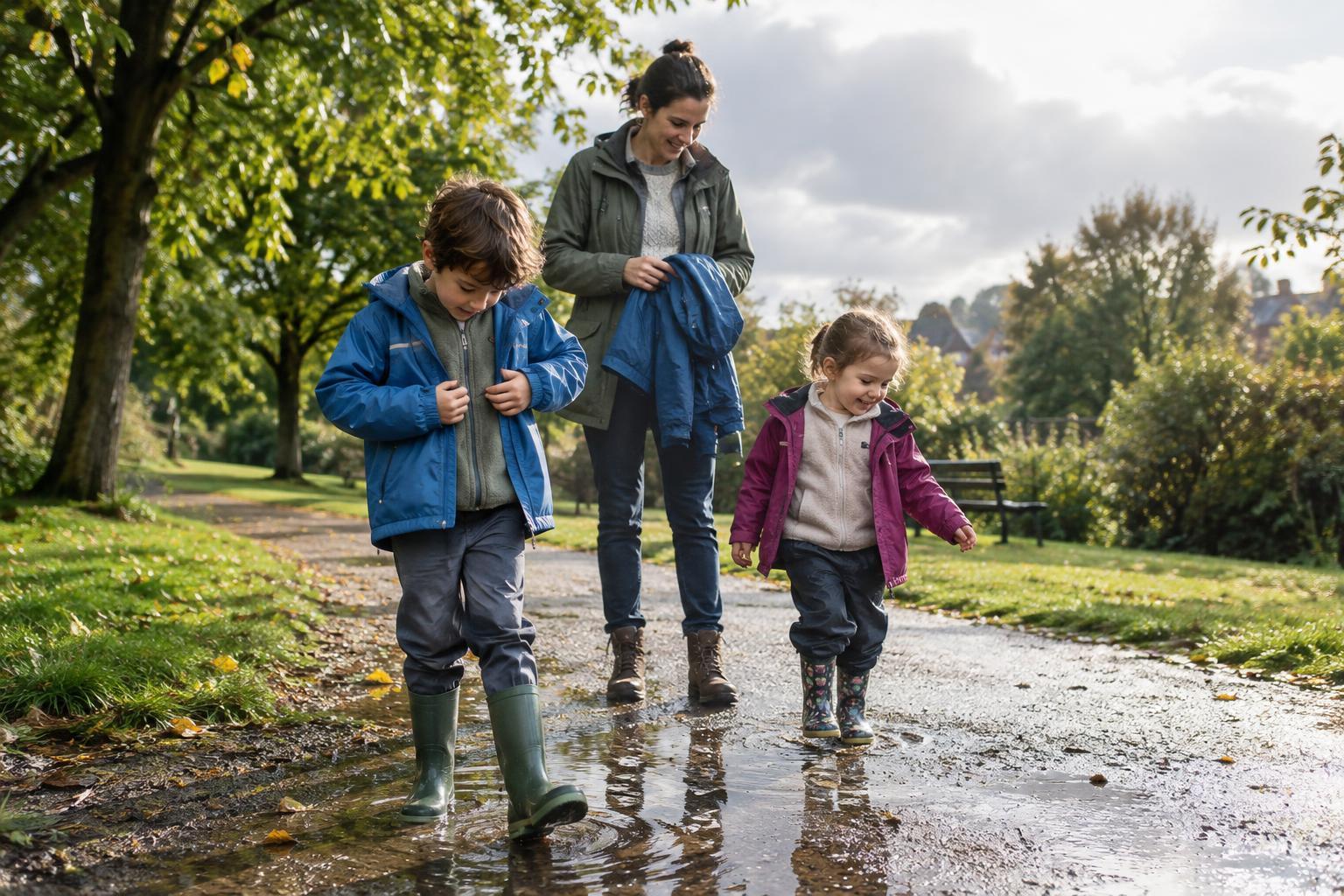
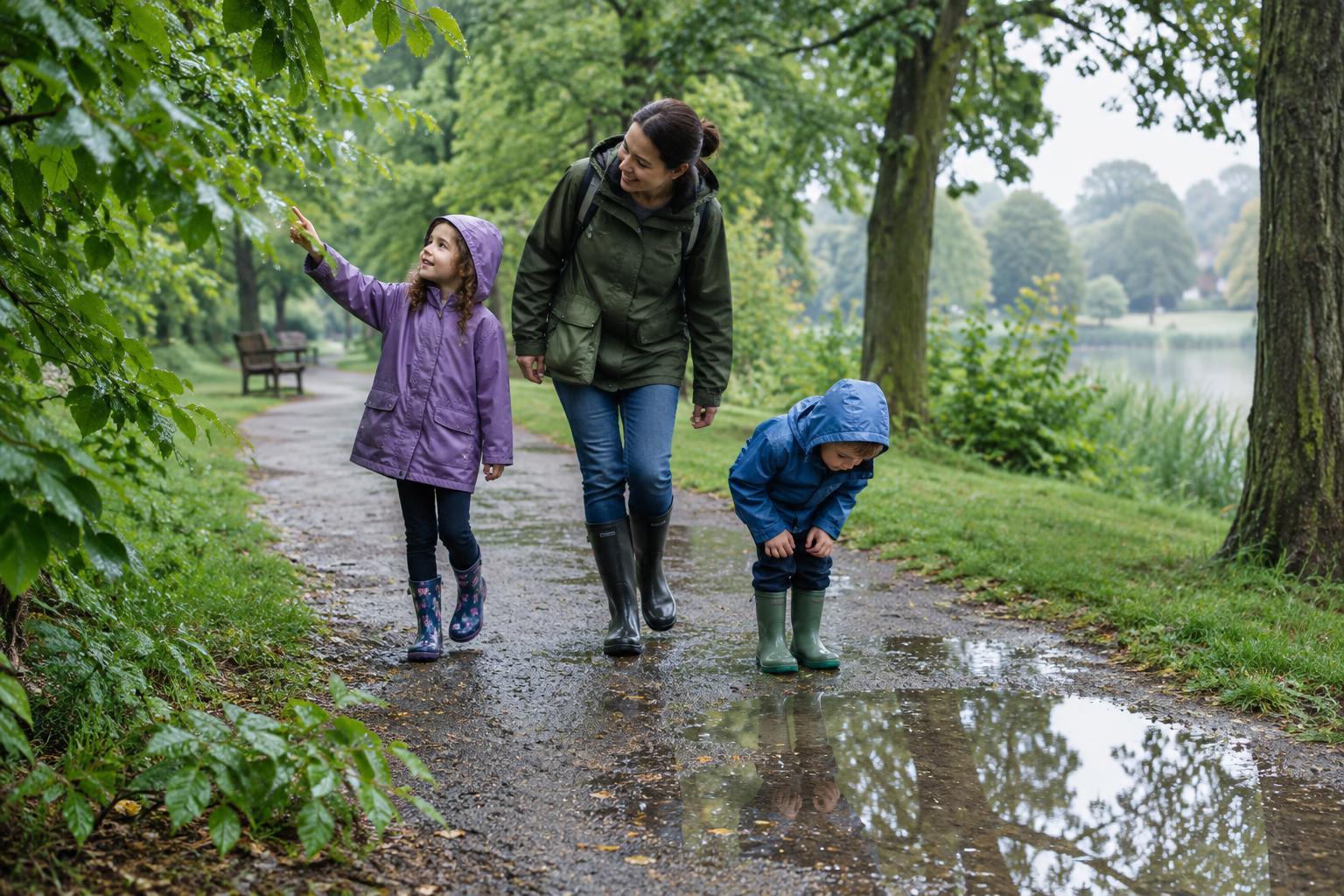
Familiar places change from day to day. A child might watch puddles after rain, spot shadows in the afternoon or notice how leaves move in the wind. You do not need to provide a lesson or bring special equipment. Describing what you see, listening to your child’s observations and leaving room for quiet attention can make a brief walk feel worthwhile.
Match the space to your child
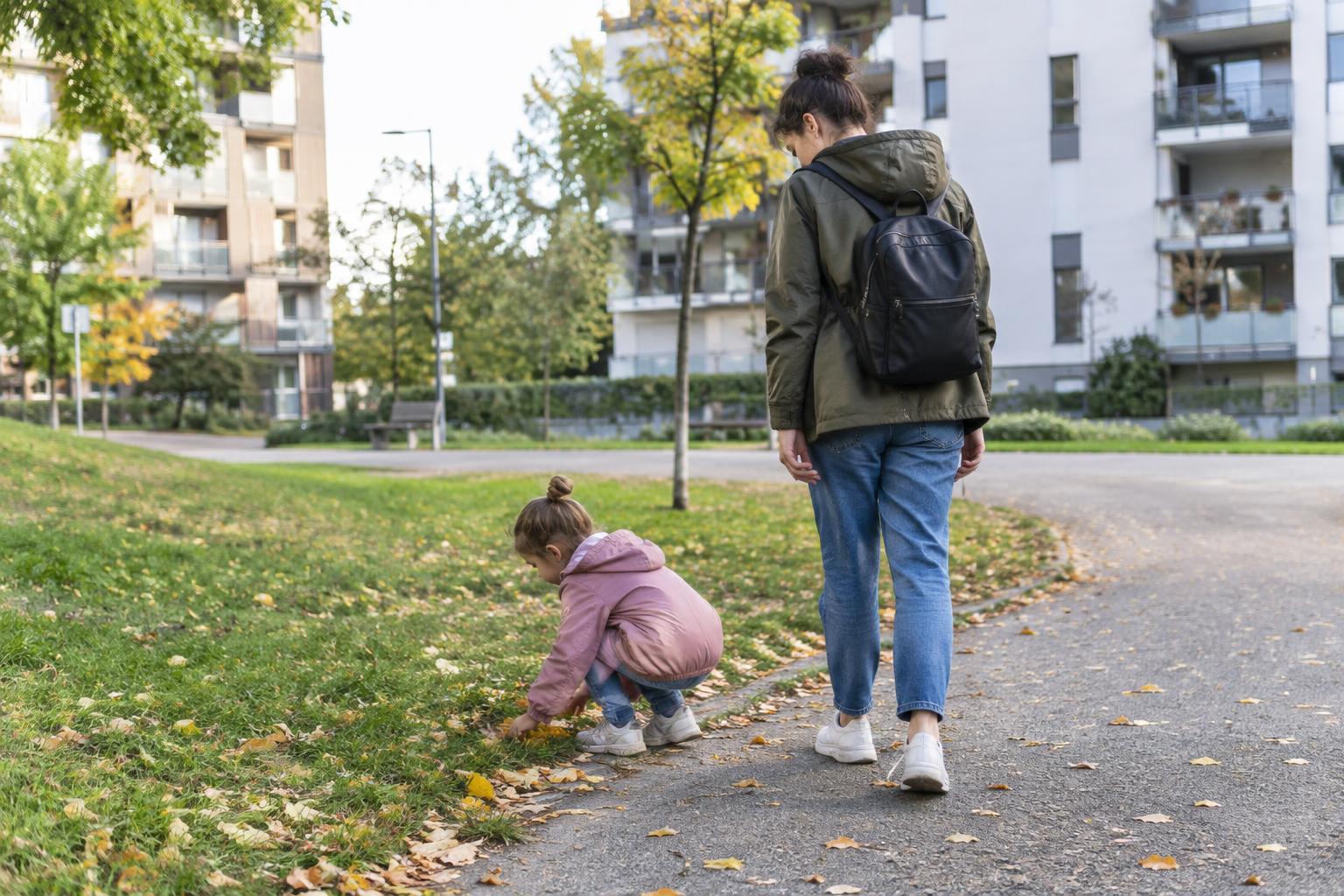
For babies and young toddlers, a comfortable place to pause may matter more than a destination. They can listen to sounds, look at passing people or touch a leaf you hold for them. Toddlers often enjoy repeating a small route, stepping over cracks or collecting a few fallen leaves where that is permitted. Keep expectations flexible: stopping often may be the main activity.
Older children may welcome more choice. Invite them to pick between two routes, look for different shapes in buildings or invent a simple game of spotting colors. A patch of open ground can become a place to move, while a bench can be a place to draw or talk. Children sharing an outing do not have to play in the same way; one may want to run while another wants to examine every interesting stone.
Make a modest plan for comfort and safety
Before setting out, consider the conditions you can observe: weather, traffic, lighting and how crowded a space feels. Choose a route and length that fit the adults and children going along. Set clear boundaries near roads or water, and check any local rules before using shared grounds or collecting natural objects. If a place feels unsuitable that day, choosing another spot or heading home is a reasonable change of plan.
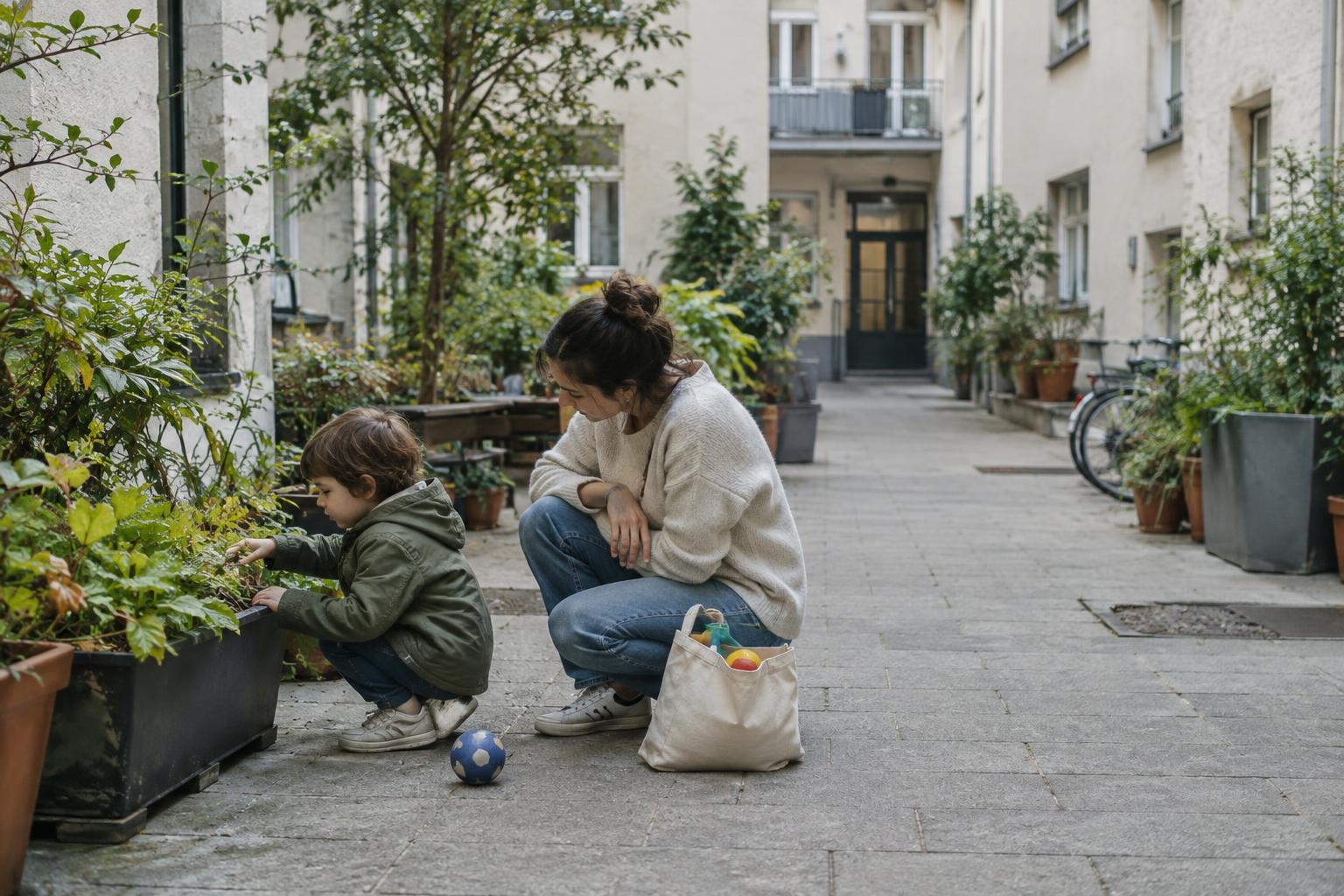
A few basics can help without turning every outing into a packing project. Comfortable footwear and clothing suited to the weather are a good start; water or a small snack may be useful for a longer trip. If you use a shared courtyard or similar space, be mindful of entrances, neighbors and other people’s need to pass through. The goal is an outing that is manageable enough to repeat, not one that goes perfectly.
Build a small rotation of outdoor places
It can help to have options for different kinds of days: a very short route for busy afternoons, a place to sit when everyone is tired and a more open space for active play. These places need not be far apart or impressive. Returning to them also gives children a chance to recognize what stays the same and what changes.
Access to outdoor space varies, and some days the available choices will be limited. Rather than measuring your family’s time outside against an ideal, pay attention to what works in your setting. A few minutes on a familiar path, taken together when you can, is a practical way to make the outdoors part of everyday life without a yard.