Start with the space you actually have
A small shared courtyard does not need to become a playground to be useful. A few minutes outside can give children a change of scene and a chance to notice, move or talk. Before bringing out toys, walk through the space together. Look for entrances, steps, planted areas and places where other residents need to pass. Decide where play can happen without blocking a route or disturbing something others care for.
If the courtyard has posted rules or an agreed way of using it, treat those as the starting point. When expectations are unclear, choose activities that are quiet, portable and easy to pause. A spot that looks empty may still be someone’s regular path or a place where a neighbor likes to sit. Keeping your setup modest makes it easier to share the space.
Pack a small, flexible outdoor kit
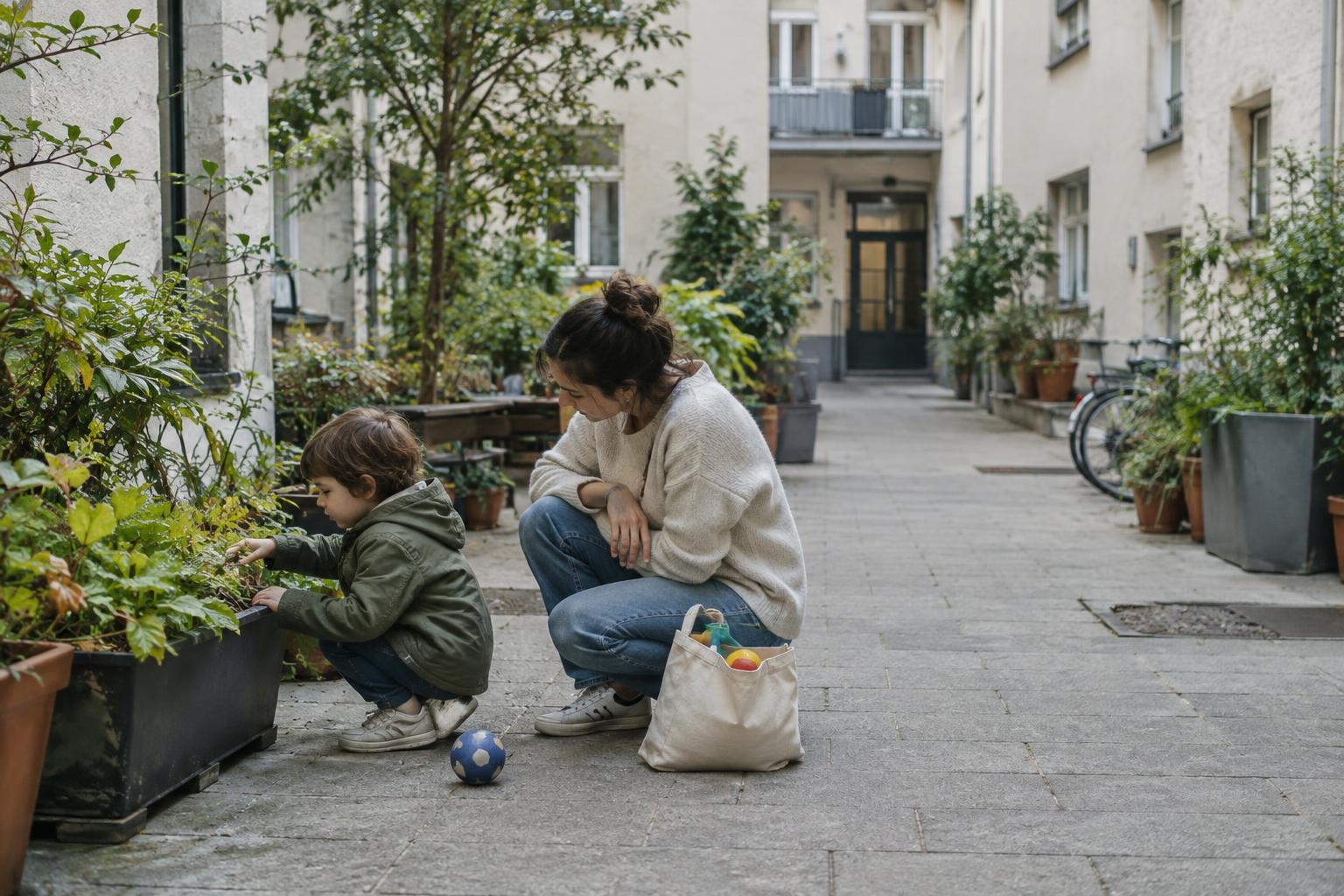
The most useful courtyard supplies are often the ones that fit in a bag and leave no trace. Sidewalk chalk, if it is permitted and washes away easily, can turn a patch of paving into a drawing space. A small container of blocks, toy animals or washable figures can support pretend play on a mat. Paper and crayons work for drawing what children see, from a leaf shape to the pattern of a wall.
For movement, try activities that do not send toys into windows, plants or walkways. Children might follow a line on the ground, step between a few temporary markers or play a quiet version of follow-the-leader. Keep the number of items small enough that everyone can help collect them. A simple habit of counting supplies in and out makes cleanup part of the routine rather than an afterthought.
Let observation do some of the work
Courtyard time does not have to be busy. Invite a child to look for different textures, listen for familiar sounds or notice how light changes across the ground. Younger children may enjoy naming colors or watching a shadow move. Older children might sketch a plant over several visits or make up a story about a doorway they can see. These activities use the surroundings without needing to pick plants or move shared objects.
Follow the child’s interest when you can. If they spend several minutes watching an insect from a comfortable distance, there is no need to rush to the next activity. You can ask what they notice, describe what you see or simply watch together. The goal is not to turn every outing into a lesson; it is to make room for curiosity and conversation.
Make sharing the courtyard part of the routine
Shared outdoor time offers everyday chances to practice considering other people. Before going out, explain in simple terms where play can happen and what needs to stay clear. If another resident arrives, children can help shift a mat or gather toys so the person can pass. A calm reminder in the moment is usually more useful than a long list of rules at the door.
Noise and space needs vary from one household to another. A game that works when the courtyard is empty may need to change when others are nearby. Keep a quieter option ready, such as drawing, looking at a book or spotting shapes in the environment. If several families use the space, friendly conversations about what works can help everyone make use of it without assuming one family’s routine suits all.
Keep outings easy to repeat
A short courtyard visit can fit between other parts of the day. Rather than planning a new activity every time, give the outing a familiar beginning and end: carry out the bag, choose one place to play, then tidy up together. Some days may call for active games; on others, sitting outside and talking is enough. Flexible expectations make it easier to use the space regularly.
Stay close enough to supervise in a way that suits your child’s age and the layout, especially near gates, stairs or areas where others may enter. Check surfaces and weather conditions before settling in, and bring water or a layer when needed. When it is time to go, leave shared furniture, plants and paths as you found them. That small courtesy helps keep the courtyard welcoming for the next person.