Choose a small, flexible adventure
A rainy-day walk does not need a destination to feel worthwhile. A loop around the block, a visit to a familiar tree or a short trip to look at puddles gives children something to anticipate while leaving plenty of room to turn back. Start with a route you know and a length that suits the youngest walker. If everyone is having fun, you can stay out a little longer; if the rain feels unpleasant, a brief outing still counts.
Before leaving, take a moment to judge the conditions. Light rain can be inviting, but thunder, lightning, strong wind, flooding or poor visibility are reasons to stay inside or postpone the walk. Choose paths away from fast traffic and places where water collects deeply. Tell children the simple plan: where you are going, what they may explore and how you will know it is time to head home.
Dress for comfort, not perfection
The most useful rainy-day clothes are the ones children can move in. A raincoat or other water-resistant outer layer, comfortable shoes with grip and socks that stay reasonably dry can make a short walk more pleasant. For younger children, check that sleeves, hoods and boots do not make it hard to see, hold hands or climb a curb. An adult-sized umbrella may be awkward for a small child, so it is fine to leave umbrellas at home.
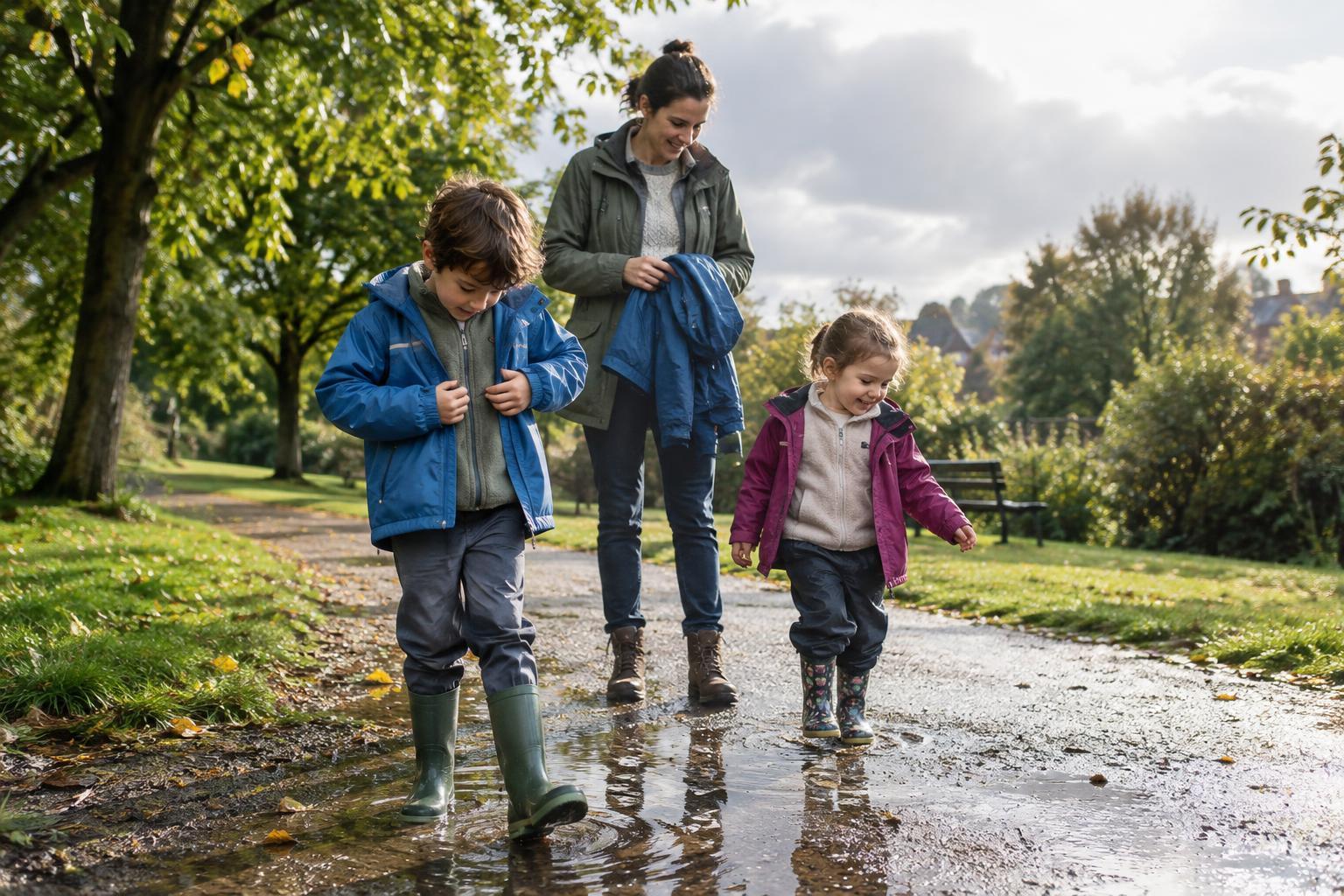
Expect some dampness rather than trying to prevent every splash. If you have them, bring a spare pair of socks or a small bag for wet items. Decide on a puddle rule before you set off, such as “small puddles on the path are okay, but we skip water we cannot see through.” Clear limits give children freedom to play without requiring a new decision at every step.
Let the weather lead the play
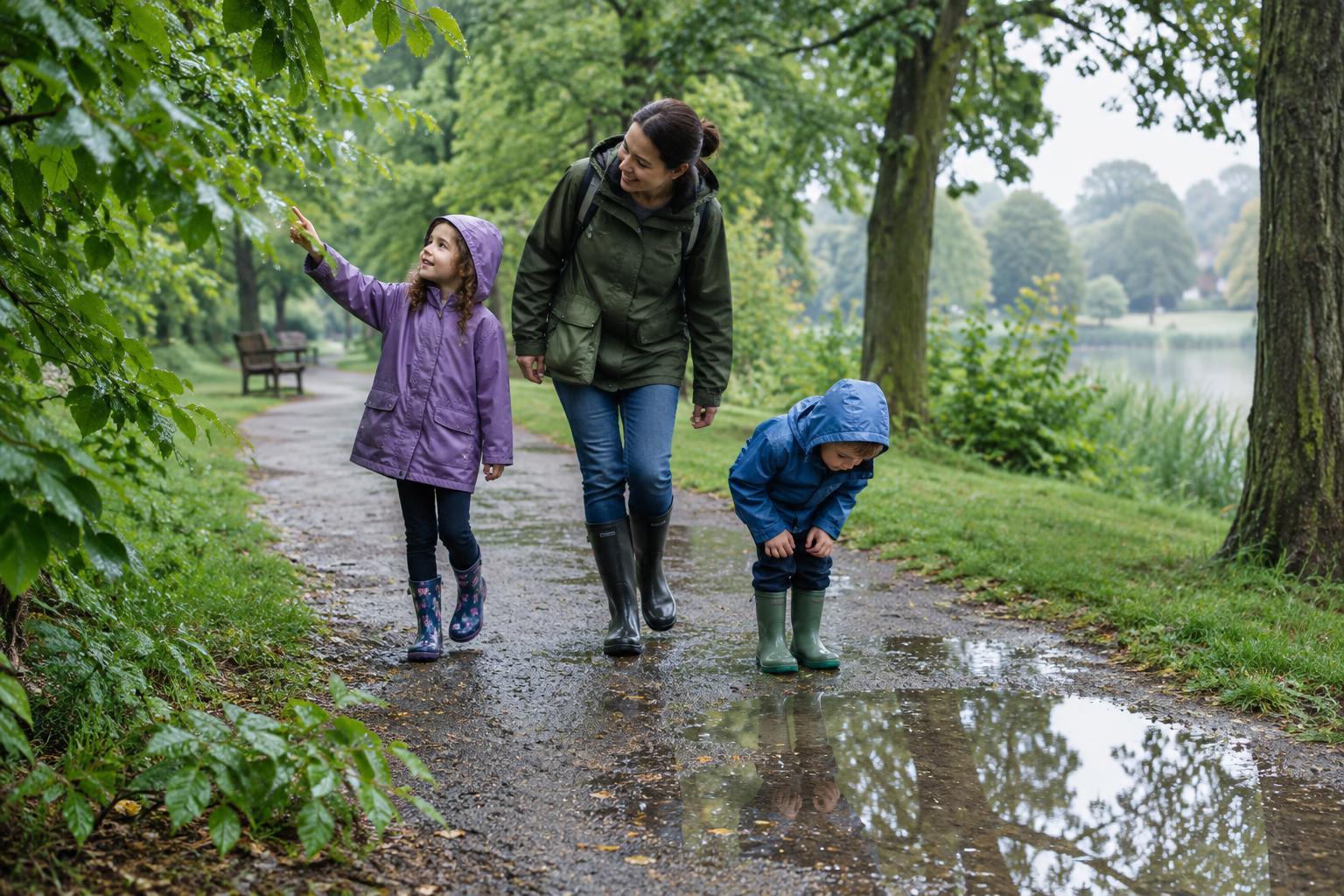
Rain changes the look and sound of familiar places. Invite children to listen for drops on leaves, notice where water travels along a path or compare the reflections in two shallow puddles. These invitations work well because there is no correct answer. A toddler might enjoy pointing and naming what they see; an older child might wonder why one puddle empties faster than another.
Try a few gentle games if the walk needs momentum. Look for three different rain sounds, follow a floating leaf from a safe distance or find colors that look brighter when wet. Let children repeat a favorite activity rather than rushing to the next one. They may learn more from watching the same trickle of water for several minutes than from completing a long list of things to spot.
Keep play away from drains, flowing water and puddles near roads. Rain can hide uneven ground or debris, so encourage children to look before stepping in. Holding hands near crossings and keeping a comfortable distance from vehicles remain important even on a quiet route.
Make room for different ages and moods
Children do not all enjoy rain in the same way. One may run toward every splash while another dislikes drops on their face or the feel of wet clothes. Offering choices helps: “Would you rather walk under the trees or along the open path?” or “Shall we stop at the next corner or go home now?” A child who watches from a sheltered spot is still taking part in the outing.
For very young children, keep the walk close to home and allow extra time for slow steps and frequent stops. Older children may enjoy choosing a route or making up a story about the places they pass. If siblings have different energy levels, give them a shared task, such as spotting signs of rain, while allowing each child to notice something different. The goal is time together, not a particular distance.
End while the walk still feels good
Heading home before everyone is cold or tired can make the next rainy walk easier to suggest. At the door, set aside a place for wet shoes and outer layers, and invite children to help with a small job they can manage. Dry clothes and a chance to warm up can make the transition indoors feel calm rather than hurried.
Later, ask one easy question: “What did you notice outside?” Children might remember the loudest raindrop, the biggest splash or simply walking beside you. Their answers can help you plan another outing that fits your family. A rainy walk does not have to be long, tidy or especially adventurous to become a welcome part of an ordinary day.