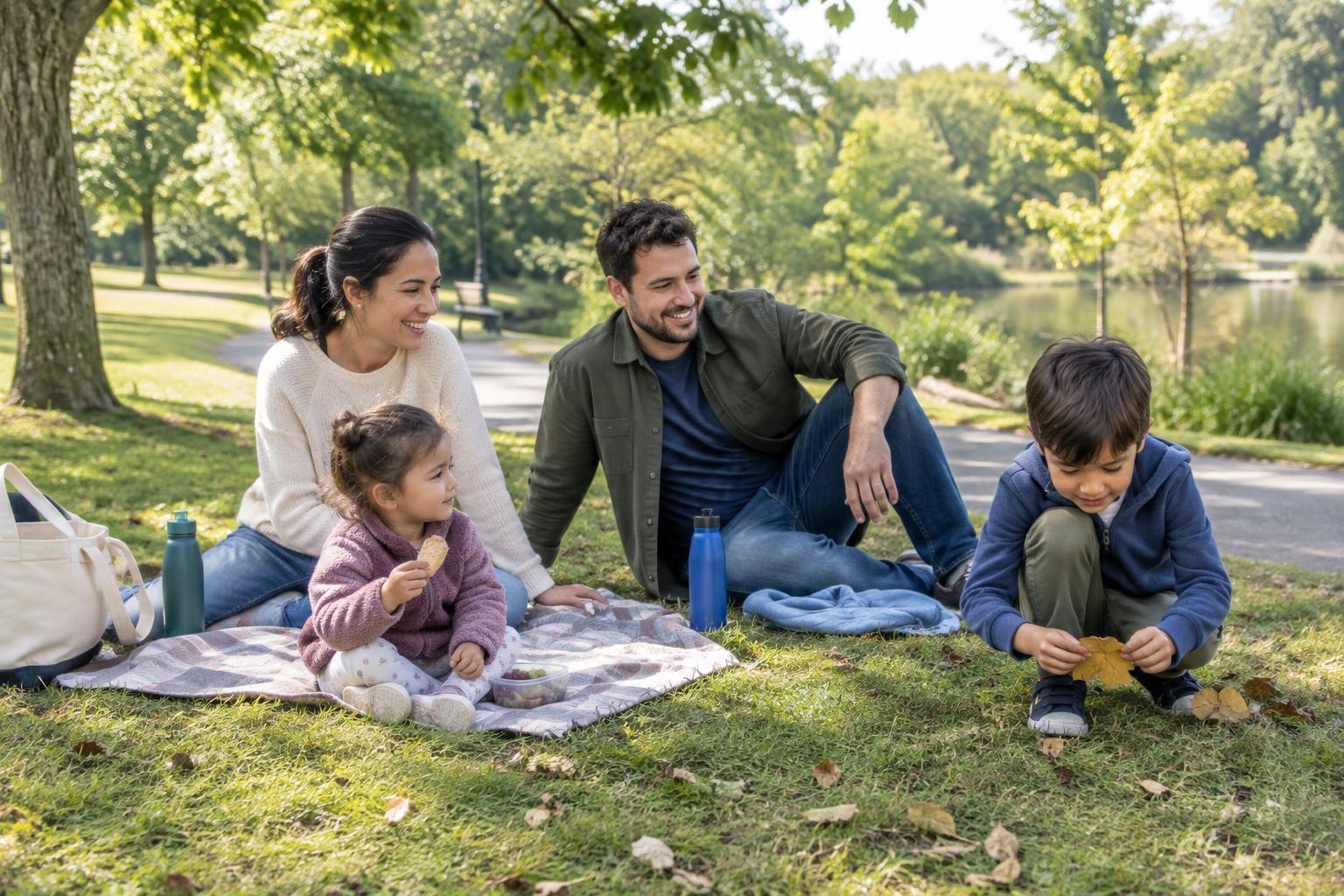
Start with a simple reason to care
A walk can feel very different to a child who is racing ahead, a toddler who wants to touch every leaf, or an older child who has spotted a bird. Before setting out, offer one easy idea: this place is home to living things and is also used by other people. We can enjoy it while leaving room for both.
Keep expectations small enough to remember. Try “look before you touch,” “give animals space,” and “leave the path ready for the next visitor.” These phrases are more useful on a busy walk than a long list of rules. Tell children where they may explore freely, too. A sturdy fallen leaf on the ground may be fine to examine, while a growing flower is best admired where it is. Follow any posted guidance about collecting or staying on paths.
Make observation the main activity
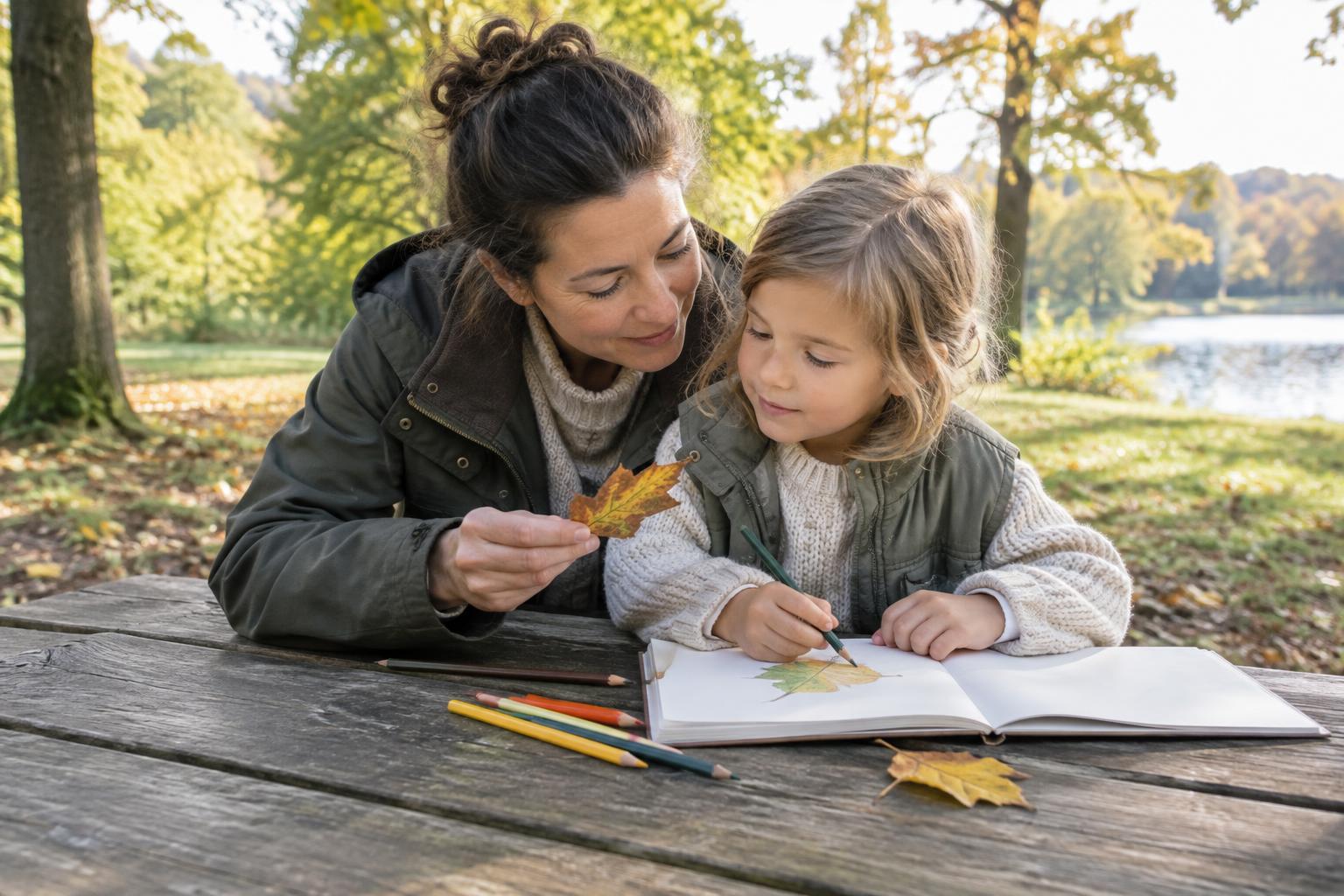
Children do not have to pick something up to learn about it. Invite them to find three different leaf shapes, listen for two kinds of sounds, or notice where shade changes the plants they see. A young child might point, name colors, and copy a bird’s movement. An older child might sketch a tree, compare textures using words, or wonder why a plant grows in one spot but not another.
When a child reaches for a flower or pulls at a branch, acknowledge the curiosity before redirecting it: “You want a closer look. Let’s bend down and see the petals without picking them.” If touching is permitted, demonstrate a light touch on a suitable surface rather than assuming every plant is safe or resilient. Washing hands after outdoor play and avoiding unknown berries, mushrooms, and plants are sensible family habits.
Give wildlife room to behave naturally
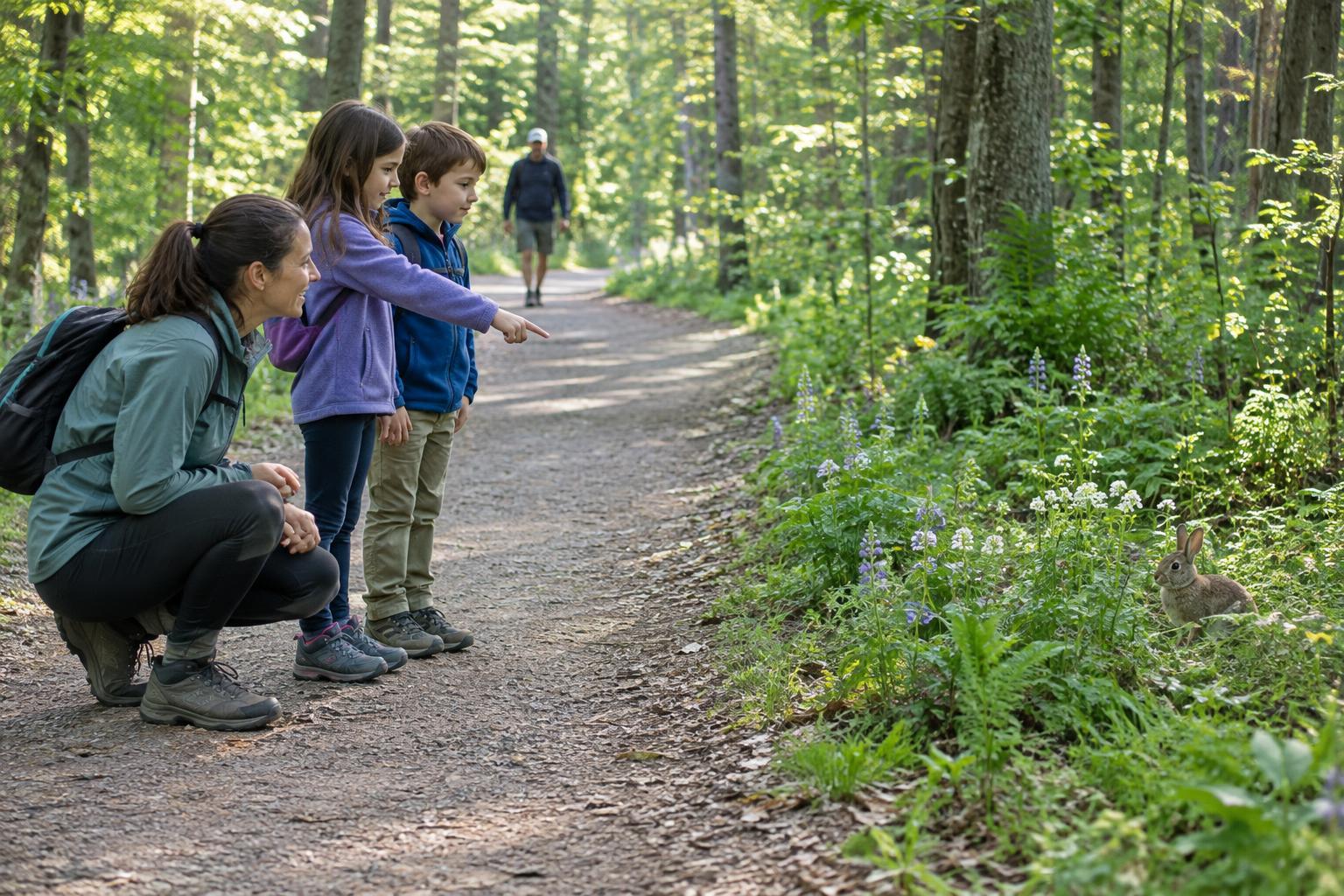
Seeing an animal can be exciting, especially when it seems close enough to approach. Pause and watch from a comfortable distance instead. Explain that staying back lets the animal choose what to do next. Resist the urge to feed wildlife, even when an animal appears interested; food brought for people may not be appropriate for it, and feeding can encourage animals to seek out visitors.
Offer a concrete job when excitement runs high. A preschooler can practice using a quiet voice while watching a squirrel. An older child can notice what an animal is doing without trying to make it move. If you have a pet with you, keep it under control and follow the rules for that trail. Should you find an animal that appears injured, give it space and seek guidance from an appropriate local service rather than asking a child to handle it.
Practice sharing the trail
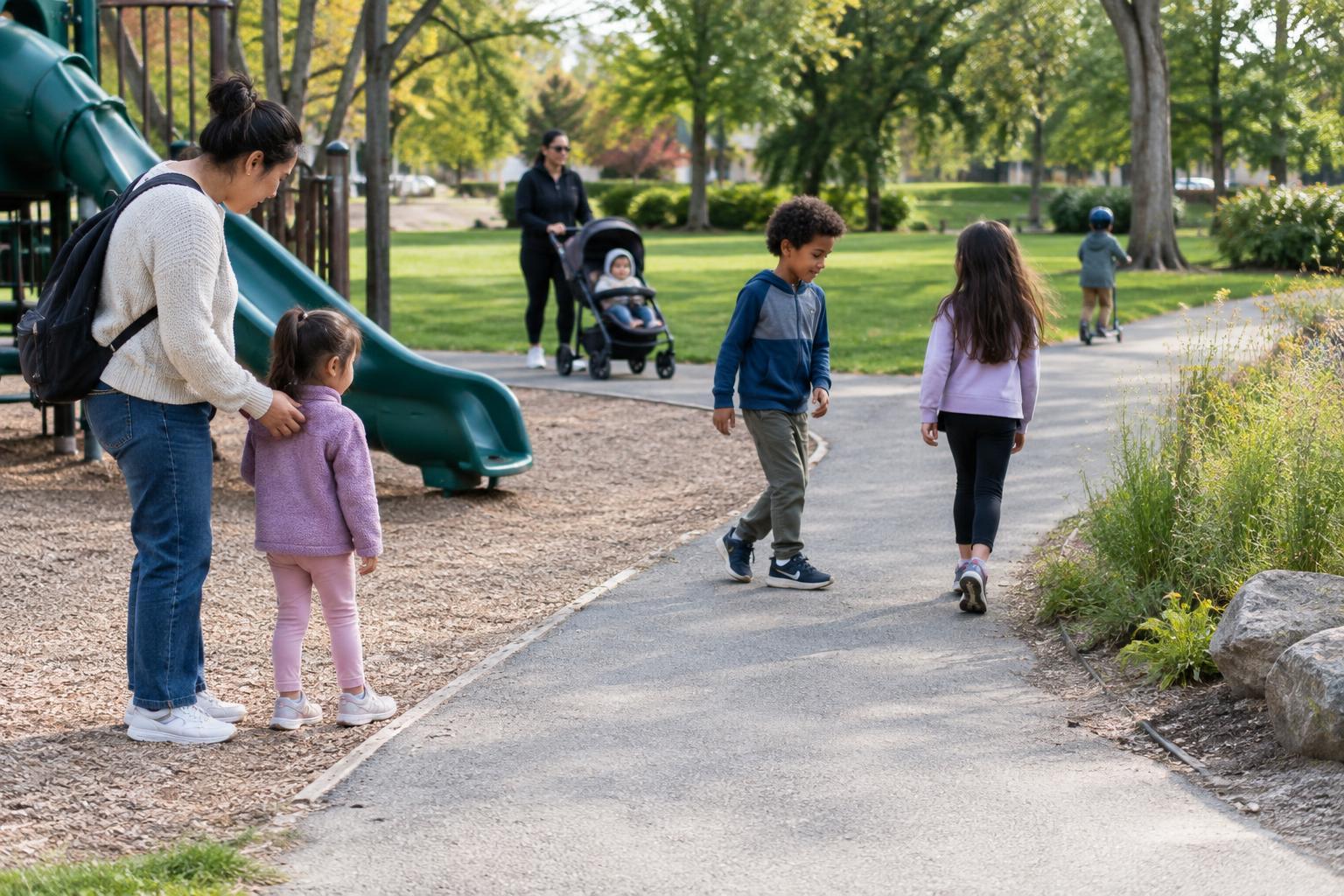
Paths are shared spaces, not just routes to a destination. Before the walk, agree on a simple plan: stay close enough to hear a caregiver, pause at crossings, and step aside where it is safe to let others pass. On narrow paths, children may need help noticing people approaching from behind or around a bend. A calm “Let’s make room” models courtesy without turning every encounter into a correction.
Show children how to carry out what they bring in, from snack wrappers to tissues. A small bag for family litter can make cleanup easier. Leave natural objects and trail features where they are unless local guidance clearly allows otherwise; even an attractive rock or stick may be part of a habitat or a path boundary. If a child wants a keepsake, a drawing or a remembered description can travel home instead.
Let the walk be a practice, not a test
Outdoor courtesy develops through repetition. Toddlers may need a hand near delicate plants and frequent reminders not to chase animals. School-age children can take more responsibility, such as spotting trail signs or choosing a place to stop for a snack. For any age, a short walk with time to notice things may work better than a long route that leaves everyone hurried.
Expect imperfect moments. If a child steps off a marked path or shouts near a bird, guide them back and briefly explain why. Later, ask what they noticed and what they might do next time. The goal is not a flawless outing. It is to help children enjoy being outdoors while gradually learning that their choices affect plants, animals, and the people who come after them.