Start by saving ingredients, not whole plates
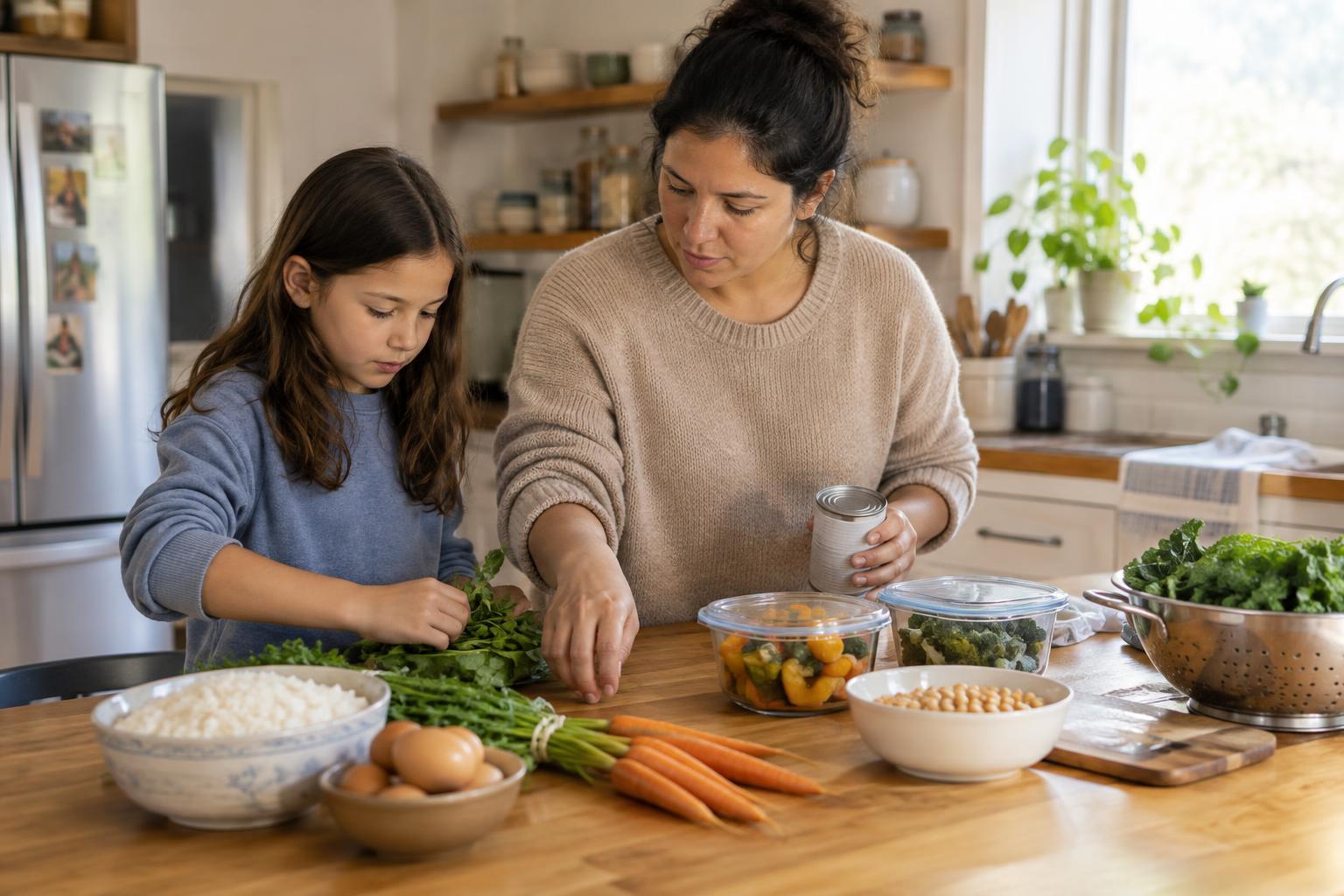
Leftovers are easier to use when you think of them as ingredients for a future meal. Cooked rice, roasted vegetables, beans, chicken, pasta, or a small amount of sauce can each play a different role tomorrow. Before packing up dinner, notice which parts can be stored separately. Keeping a sauce apart from cooked grains, for example, leaves more options than mixing everything into one container.
You do not need a detailed plan for every spoonful. A quick note on a container can help you remember what is inside, especially if several family members put food away. Cool and refrigerate perishable food promptly, use clean containers, and follow appropriate storage and reheating guidance. If you are unsure whether something has been stored safely, it is better not to build another meal around it.
Change the format of the meal
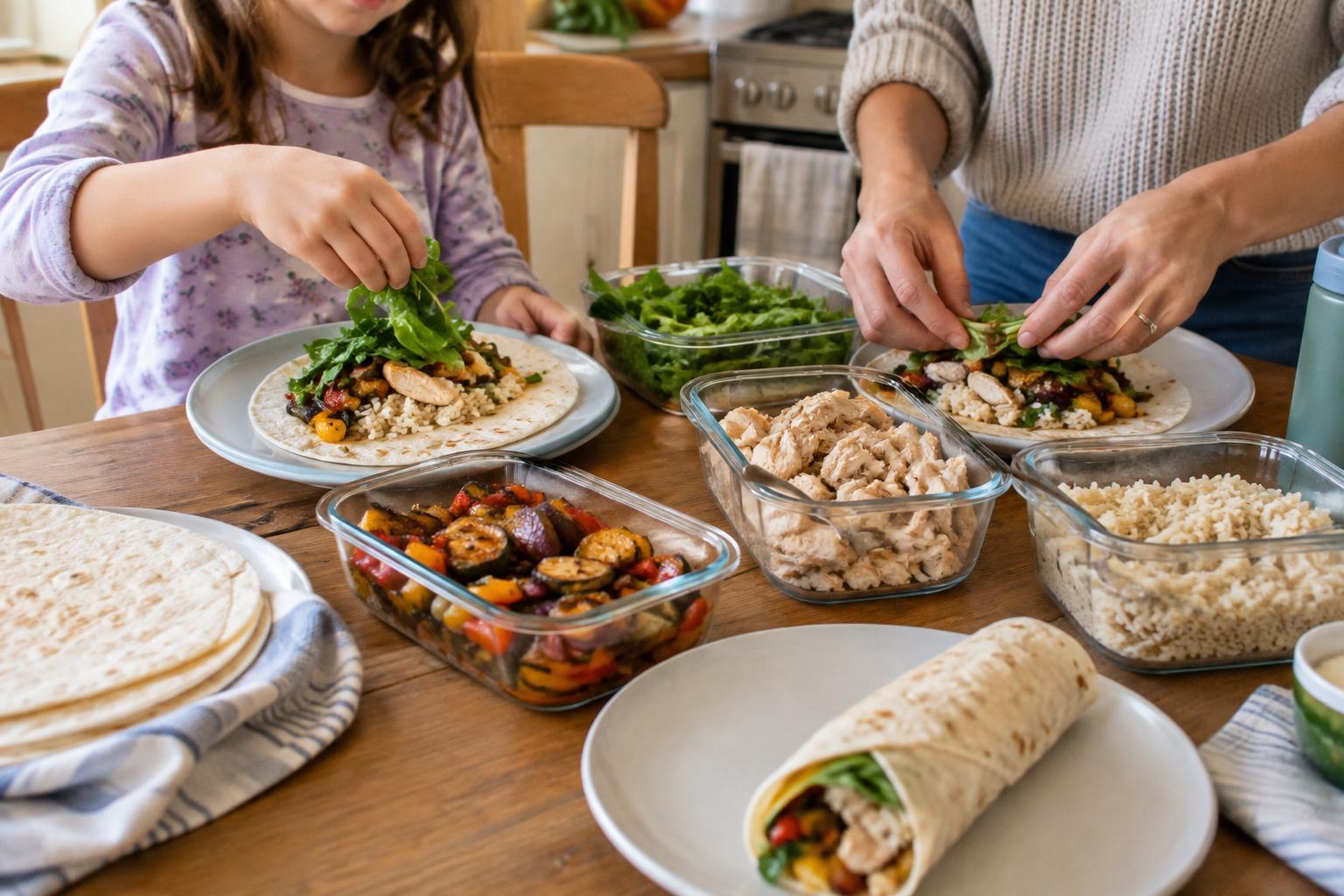
One of the simplest ways to avoid repeating a plate is to change how the food is served. Yesterday’s roasted vegetables can become a topping for a warm grain bowl, a filling for a wrap, or part of an omelet. Leftover pasta can be mixed with different vegetables and served as a lunch salad. A small portion of cooked beans might become a spread for toast or a filling for a baked potato.
Think about contrasts rather than a complete reinvention. If the first meal was warm and soft, the next might include something crisp, such as sliced cucumber or toasted bread. If dinner was served as separate items, combine suitable leftovers in a soup or wrap. A new shape, texture, or accompaniment can make familiar ingredients feel like a different meal without requiring much extra cooking.
Build around what you have enough of
A leftover does not have to provide a full serving for everyone to be useful. A little cooked chicken can be shared across sandwiches with vegetables; a spoonful of tomato sauce can flavor a pot of beans. If the amount is small, make it an accent rather than the center of the meal. Add a dependable base, such as bread, eggs, potatoes, or cooked grains, according to what your household enjoys and has available.
A loose formula can make decisions easier: choose a base, add the leftover, then include a fresh or pantry ingredient that changes the result. For instance, rice plus roasted vegetables plus an egg is different from rice plus beans plus a simple tomato sauce. The formula is flexible, so it can work even when the refrigerator holds several small containers rather than one obvious main dish.
Give children a manageable role
Children may be more interested in a leftover when they can see how it becomes something new. Invite them to choose between two possible formats: “Should these vegetables go in a wrap or beside toast?” A younger child might wash produce or arrange safe-to-handle toppings. An older child might suggest a combination or help assemble their own bowl, with supervision suited to their skills and the task.
Keep expectations gentle. Helping prepare a meal does not guarantee that a child will want to eat every part of it. Offering familiar ingredients alongside a less familiar combination can make the table feel approachable. You can also leave components separate when practical, so each person can put together a plate they recognize while the household still uses what was saved.
Make the next meal easier before you need it
A small habit at cleanup can save effort the next day. As you put food away, ask whether a leftover is best suited to lunch, a snack, or another dinner. Store it where you will notice it and pair it mentally with one easy addition: “These vegetables can go with eggs,” or “This rice can become a bowl.” That is enough of a plan for a busy evening.
Not every leftover needs a clever transformation. Sometimes reheating part of a meal and adding fresh fruit or vegetables is the most useful choice. The goal is not to disguise food or create a new recipe every time. It is to keep meals flexible, reduce the number of decisions at mealtime, and make good use of food the family already has.