Begin before you leave home
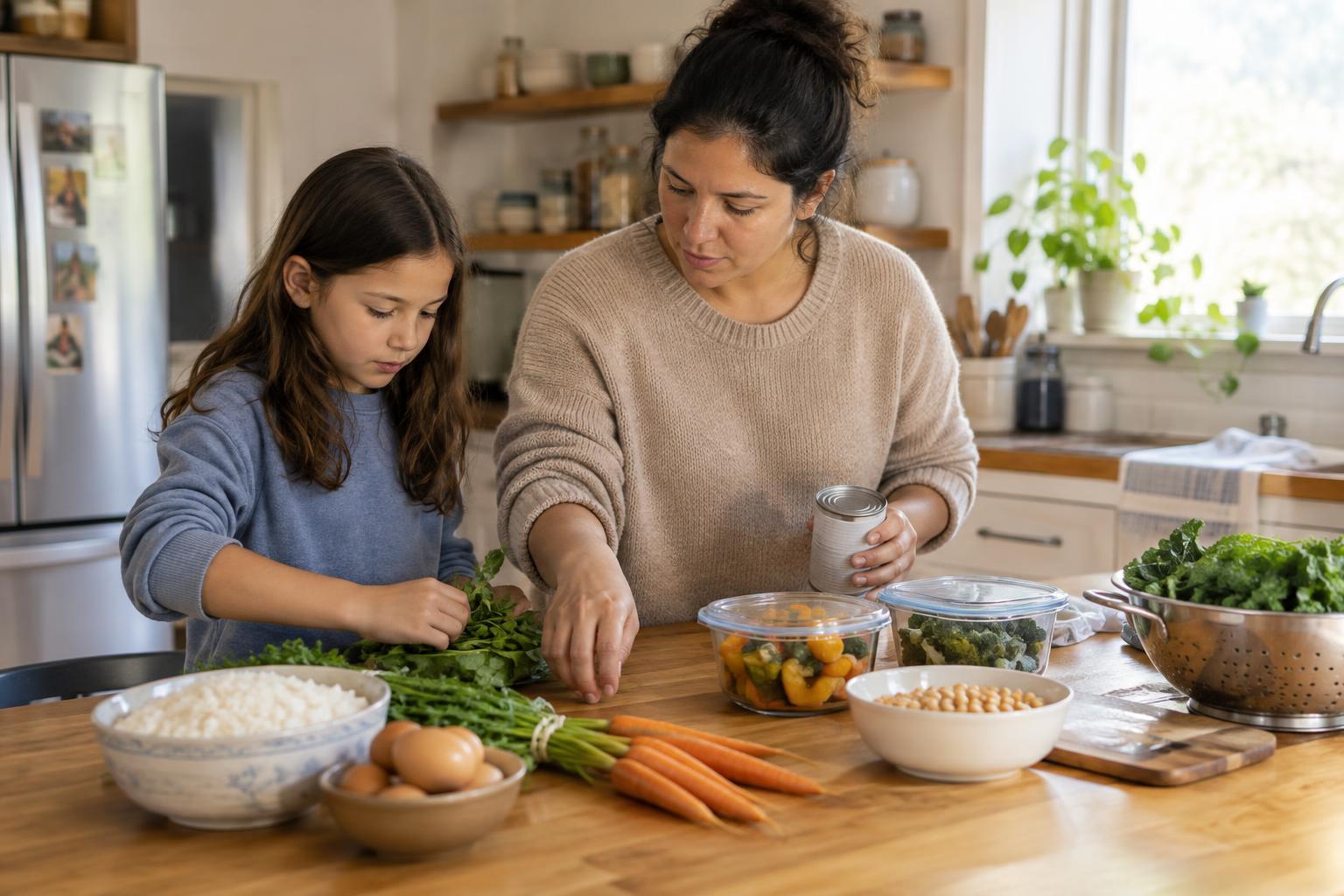
Grocery shopping fits more naturally into family life when children can see what it is for. Before a trip, look together at one or two meals you expect to make. Check the kitchen for ingredients you already have, then add what is missing to a short list. This connects shopping to familiar meals rather than presenting the store as a place full of unrelated choices. A child might notice that the pasta is nearly gone or help count the apples left in the bowl.
Keep the plan small enough for the trip you can manage. A full weekly menu is not necessary; deciding on a few meal ideas and useful staples is enough. If your child wants to add something, you can discuss where it would fit: breakfast, a packed snack, or a dinner ingredient. Letting children contribute does not mean promising to buy every suggestion. It means giving their ideas a place in the conversation.
Give each child a manageable role
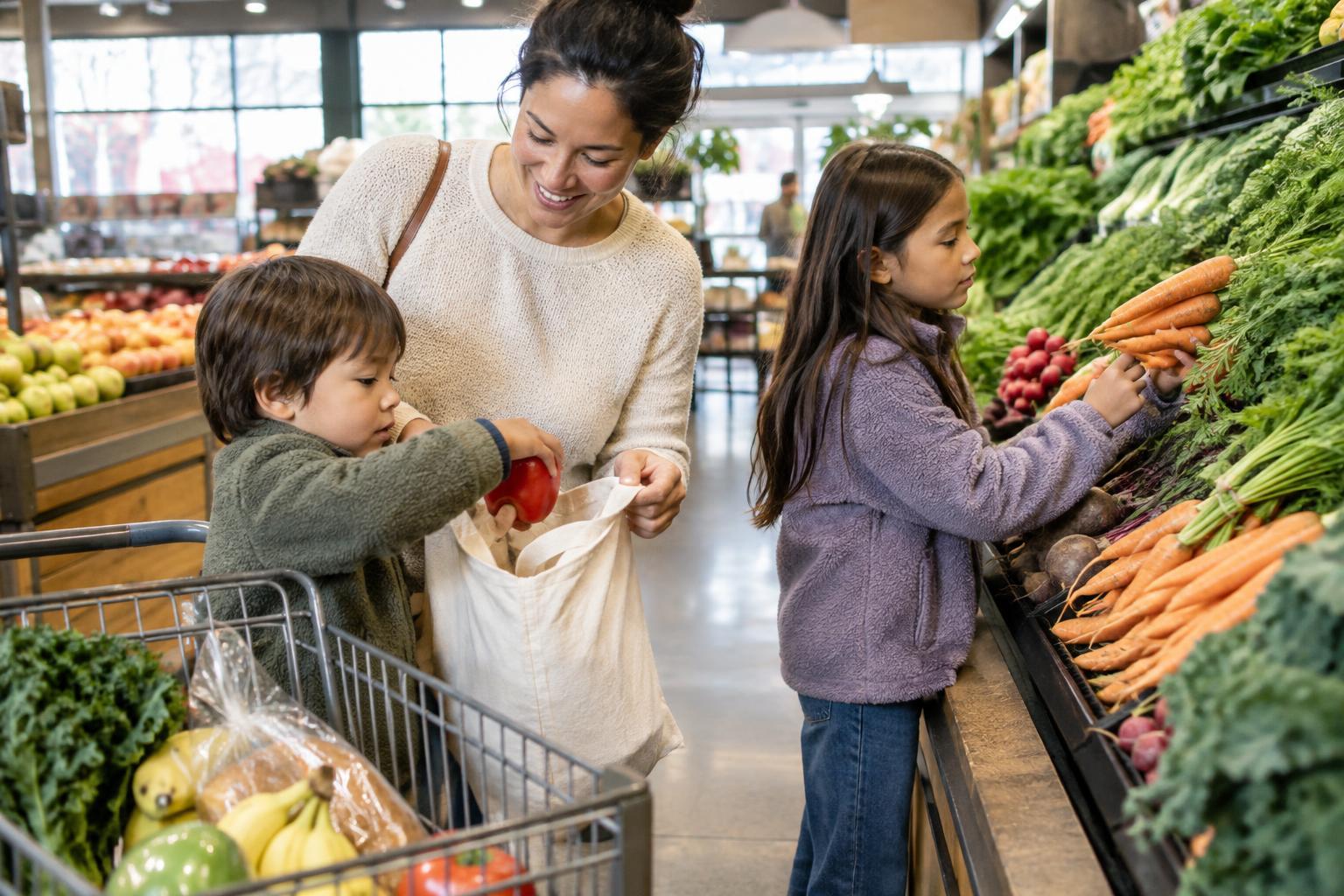
A role makes the trip more engaging and gives a child something to return to when the store feels busy. A toddler might point out a familiar fruit while an adult handles the cart and purchases. A preschooler can look for an item pictured on a list or place a sturdy package in the cart. Older children may compare two package sizes, read an ingredient list, or help find everything needed for a recipe. Choose tasks that match the child and the pace of the day, not just their age.
Set expectations before entering: what you are buying, whether there is room for one child-selected item, and what to do if you get separated. Keep the rules brief and repeat them calmly when needed. Stores can be noisy and tiring, especially near mealtimes or at the end of a long day. On a difficult trip, a child’s job might simply be to stay close and help check off one item. Participation can grow over time.
Talk about choices without making every food a debate
Shopping offers ordinary chances to talk about food. You might ask which vegetables would work in a soup, whether the bananas are ready to eat today, or what could go with a familiar sandwich. These questions invite observation and planning rather than putting a child on the spot to choose a whole meal. If several options would work, offer a limited choice: “Should we get carrots or cucumbers for lunch?” Both answers move the plan forward.
It is also fine to say no to an unplanned request. A simple explanation such as “That is not on our list today” is often clearer than a long argument in the aisle. Try to avoid labeling foods as rewards for good behavior or treating a new food as a test a child must pass. Families make food choices for many practical reasons, including preferences, time, availability, and cost. Children can learn that meals involve balancing those needs without needing to agree with every decision.
Carry the routine through unpacking and cooking
The learning does not stop at checkout. At home, invite children to help put suitable items away: sturdy packages on a low shelf, produce in a bowl, or ingredients for tonight’s meal together on the counter. Adults can handle heavy bags, breakable containers, and anything that needs particular care. As you unpack, name how an item will be used: the beans for tomorrow’s lunch, the peppers for a shared dinner, or the oats for breakfast.
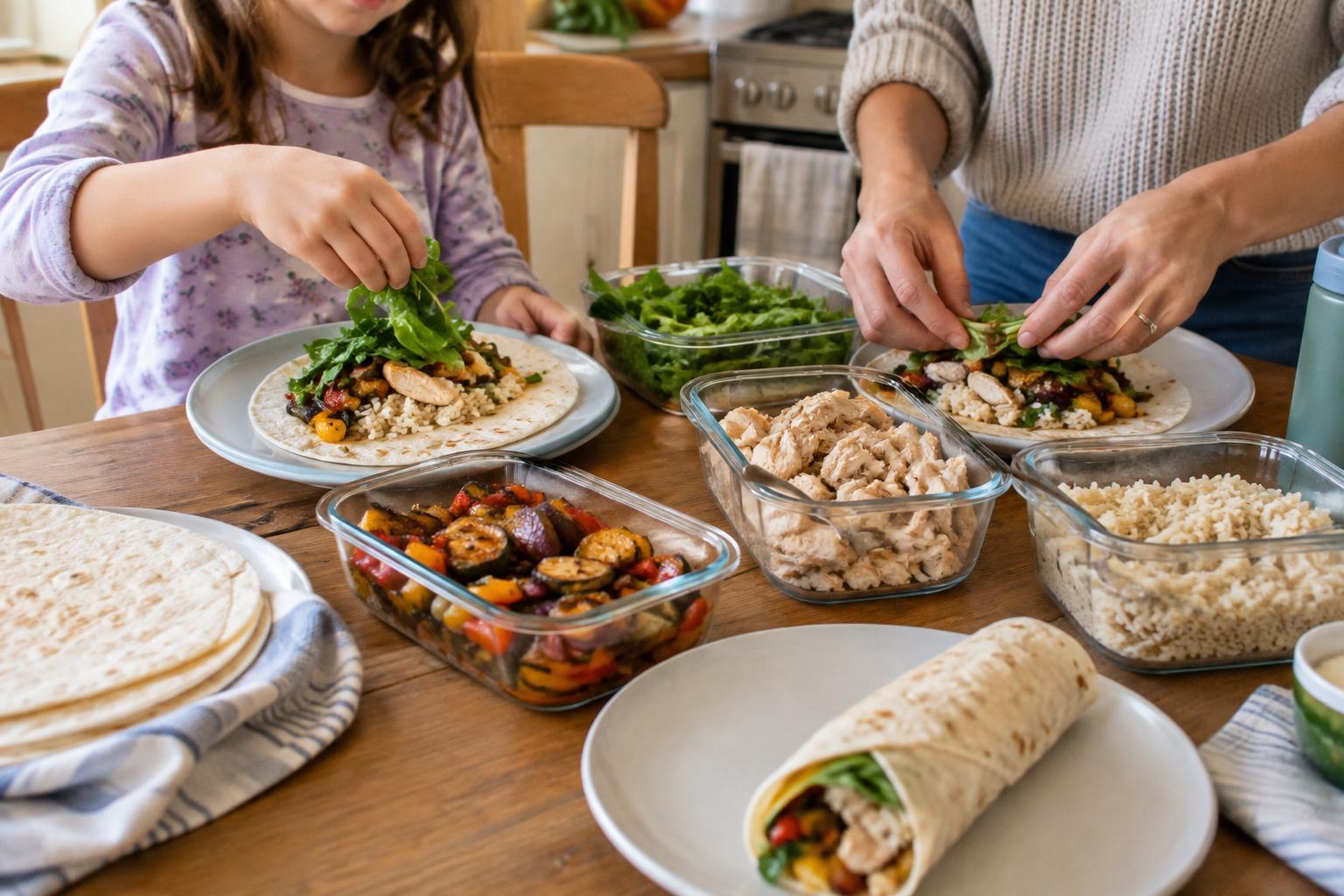
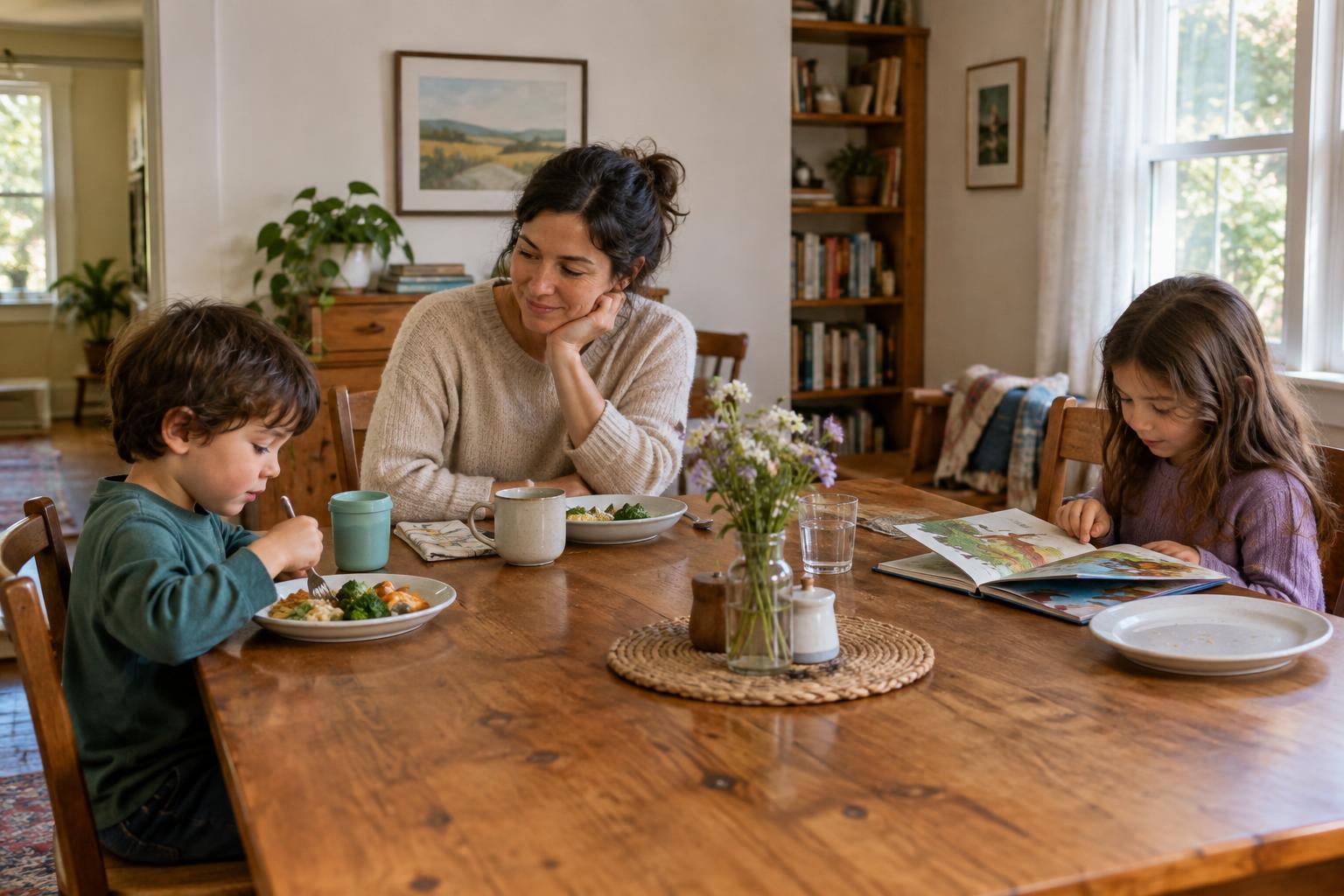
When it is time to prepare food, refer back to the shopping trip. A child who chose a vegetable can wash it with supervision or help add it to a dish in an age-appropriate way. If the meal plan changes, explain that too: the ingredients can often be used another day. This helps children see shopping as one flexible step in a routine that includes storing, preparing, eating, and cleaning up—not as an isolated errand.
Leave room for real-life trips
Not every grocery run needs to be an activity. Sometimes you need a quick stop, a child is tired, or the store is crowded. You can still keep the connection to meals with one small prompt: “We came for rice for dinner,” or “Can you spot the yogurt on our list?” On another day, shopping alone may be the easier option. A routine should support family life, not add pressure to it.
Over repeated trips, children can take on more of the process: suggesting a meal, checking what is at home, helping make the list, finding an ingredient, and seeing how it appears on the table. The value is in those everyday connections. Even when plans change and choices are limited, shopping together can offer a practical way to talk about how a household feeds itself.