Make room for different paces
A shared meal does not mean everyone will take the same amount of time to eat. A younger child may pause to talk or inspect each part of a meal. An older child may finish and want to get back to an activity. Adults may eat at different speeds too, especially when they are helping others at the table. These differences are ordinary, but they can make the end of a meal feel awkward.
It helps to separate the goal of eating together from the goal of finishing together. Families can share a beginning, a few minutes of conversation and a familiar closing routine without asking anyone to match another person’s pace. Try to avoid making speed the focus of praise or complaints. “You’re the first one done” and “Why are you still eating?” can both draw more attention to the clock than the meal.
Set up a meal that can unfold calmly
A little preparation can reduce the pressure once everyone sits down. Put water, napkins and any commonly needed utensils within reach, so the meal is not repeatedly interrupted. For younger children, serving a manageable first portion can make the plate feel less overwhelming; more can be offered if they want it. Letting family members serve themselves when they are ready and able can also help them notice how much they would like.
If one person routinely needs extra time, consider whether the meal starts late in the household’s evening routine. Moving it earlier when possible may leave more room for conversation and cleanup. This is not about setting a strict timer for eating. It is about giving the table a reasonable place in the day, rather than asking a slow eater to hurry because another task is already overdue.
Give early finishers a clear next step
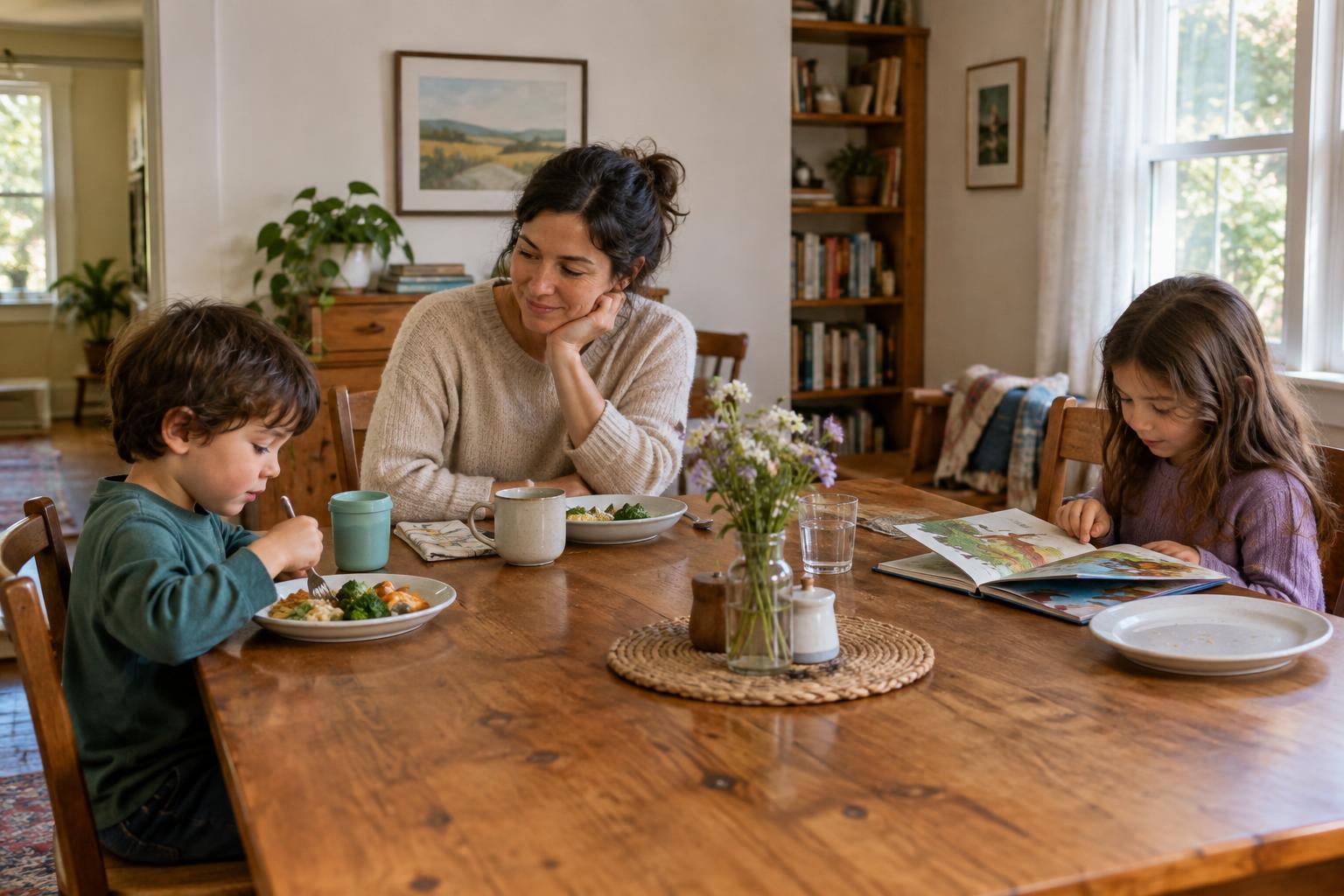
A child who finishes first may find it hard to sit while everyone else continues. Agree on a simple routine before the meal begins: they can stay for a short family chat, help carry their own dish when appropriate, then move to a quiet activity nearby. A book, drawing pad or small tabletop activity can work better than a noisy game that pulls everyone’s attention away from eating.
Age and supervision matter. A young child may still need an adult close by, even after leaving the table. Older children can often take more responsibility for clearing their place and choosing what to do next. The aim is not to reward fast eating with something exciting. It is to make the transition predictable, so nobody feels they must keep eating—or rush to finish—to take part in what comes next.
Support the person who is still eating
When most of the family has finished, the remaining eater can feel watched. Ask before clearing nearby plates, and keep the conversation open without making them the subject of it. A simple question such as “Would you like us to leave your plate here while we tidy up?” offers a choice without demanding an explanation. If a younger child is still eating, an adult can remain available without turning each bite into a negotiation.
It can also help to notice what is happening around the meal. Long stories, frequent interruptions or a distracting screen may stretch dinner for some families. For others, conversation is the part that makes a meal pleasant. Rather than assuming there is one correct pace, look for small adjustments that preserve the connection everyone enjoys. Keep expectations about table time clear, gentle and suited to each child’s age.
End the meal with a flexible routine
Families need a way to move on with the evening, even when eating speeds differ. A shared closing step might be thanking the cook, deciding who will wipe the table or naming one thing to do after dinner. If a meal must end by a certain time, say so plainly ahead of time and allow a comfortable window. A calm reminder is more useful than repeated countdowns.
Check in occasionally about how the routine feels for everyone. The child who finishes quickly may want more time to talk; the one who takes longer may prefer less attention. As schedules and children’s abilities change, the routine can change too. A workable family table is not one where every plate empties at once. It is one where people can eat, connect and move on without turning different paces into a contest.