Start with a short kitchen check
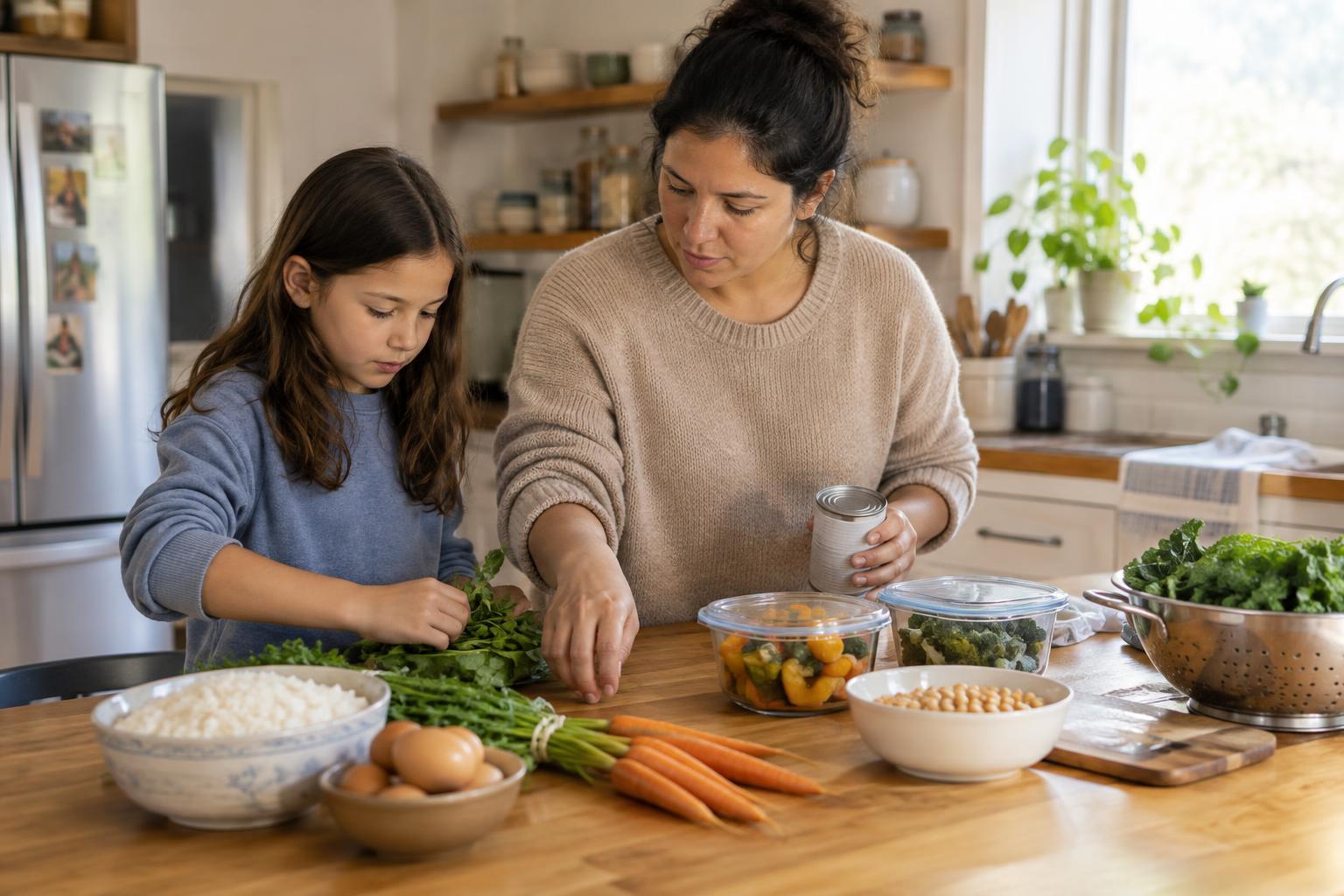
Before deciding what to cook, take a few minutes to look through the refrigerator, freezer, and cupboards. Notice ingredients that need using soon, such as fresh vegetables, opened containers, or ripe fruit. Then look for foods that can help turn them into a meal: rice, pasta, bread, eggs, beans, or other familiar staples. You do not need a complete inventory. A short list of what is available is enough to give meal planning a starting point.
Group the list by how soon ingredients need attention. Fresh items may shape the next meal or two, while longer-lasting foods can fill gaps later in the week. Check that stored food is suitable to use, rather than relying on a plan to make questionable ingredients work. This approach can also make shopping more focused: instead of buying everything for a new recipe, you can buy only what helps you use what you already have.
Build meals from flexible patterns
A meal pattern is often more useful than a strict recipe. Try a grain or bread with vegetables and a protein food, a soup with whatever vegetables are on hand, or a baked potato with simple toppings. For example, leftover rice might become a bowl with cooked vegetables and beans one day, then sit alongside eggs at another meal. The pattern stays familiar even when the ingredients change.
Keep a few low-effort options in mind for busy evenings. Pasta with a simple sauce, a sandwich plate with cut vegetables, or an omelet with toast can all adapt to what is available. If a planned ingredient is missing, ask what role it played in the meal. Was it there for texture, flavor, or to make the meal more filling? Choosing a substitute becomes easier when you are not trying to copy a recipe exactly.
Make room for different ages and preferences
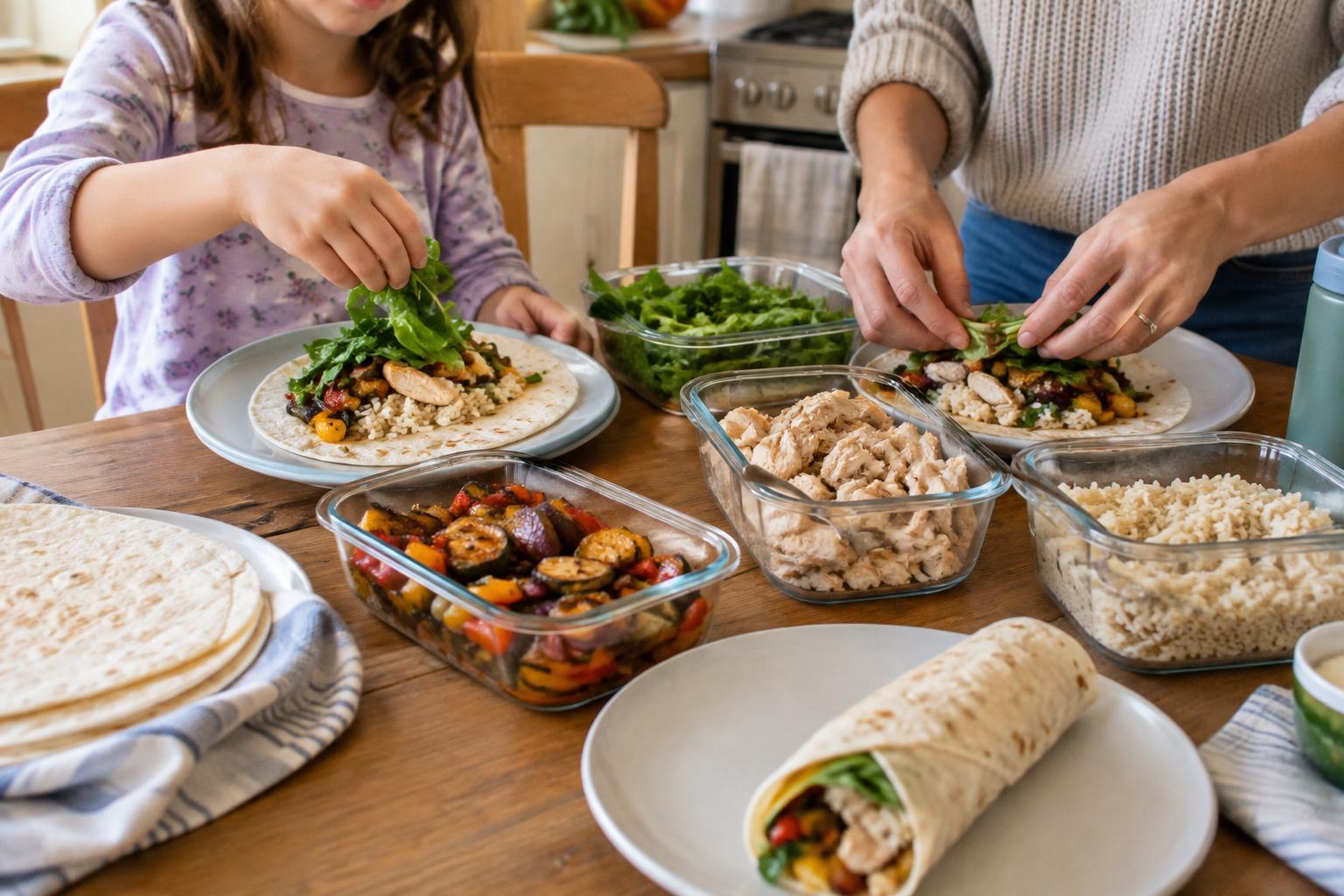
Family meals do not have to look identical on every plate. A shared base, such as cooked rice, pasta, or soup components, lets people put together a meal from the same ingredients. A child who prefers foods served separately might have vegetables beside the rice instead of mixed in. Younger children may need foods prepared in an age-appropriate shape and texture, with an adult nearby while they eat.
Invite children to take part in small, manageable ways. They might choose between two vegetables already in the fridge, wash produce with help, or put napkins on the table. Older children may be able to suggest a use for leftover ingredients or help write the shopping list. These choices give them a role in the routine without making them responsible for the whole meal. Preferences may shift over time, so it helps to keep the invitation relaxed.
Plan for the next meal, not just tonight
As you cook, consider whether one ingredient can do more than one job. A pot of plain rice, a tray of roasted vegetables, or a batch of cooked beans can be used in different combinations. Set aside what you intend to use again before serving, and store leftovers promptly and appropriately. Labeling a container with its contents can make it easier to spot when you next check the fridge.
It also helps to leave some open space in the plan. A household schedule can change, or a meal may produce more leftovers than expected. Instead of assigning a different recipe to every day, choose a few likely meals and keep one flexible night for leftovers or a quick staple-based option. The plan then supports your routine rather than becoming another task to keep up with.
Keep the routine simple enough to repeat
A practical plan might fit on a small note: foods to use soon, two or three meal ideas, and a short list of missing items. Put it where the family can see it if that is helpful. When a meal works well, remember the pattern rather than every detail. “Vegetables, beans, and rice” is easy to repeat with different ingredients another week.
Planning around what you have will not remove every last-minute decision, and it does not require every meal to be made from scratch. Its value is in giving ordinary ingredients a clear next step. A quick look, a flexible meal pattern, and room for family preferences can make everyday food routines feel more manageable.