Start with the supplies you reach for most
A spray bottle kept beside the sink or a packet of wipes left on a table can become part of the background of a busy home. That convenience is also why frequently used products deserve a deliberate storage plan. Begin by looking at the places where cleaning supplies tend to land: kitchen counters, bathroom shelves, laundry areas, and the space near an entryway.
Include products that may not immediately look like cleaners, such as laundry pods, dishwasher products, disinfecting wipes, and concentrated refills. Check guest bathrooms and bags used for cleaning, too. The goal is not to make cleanup difficult; it is to give each product a designated place that adults can use consistently and children cannot readily access.
Choose storage that fits the child and the home
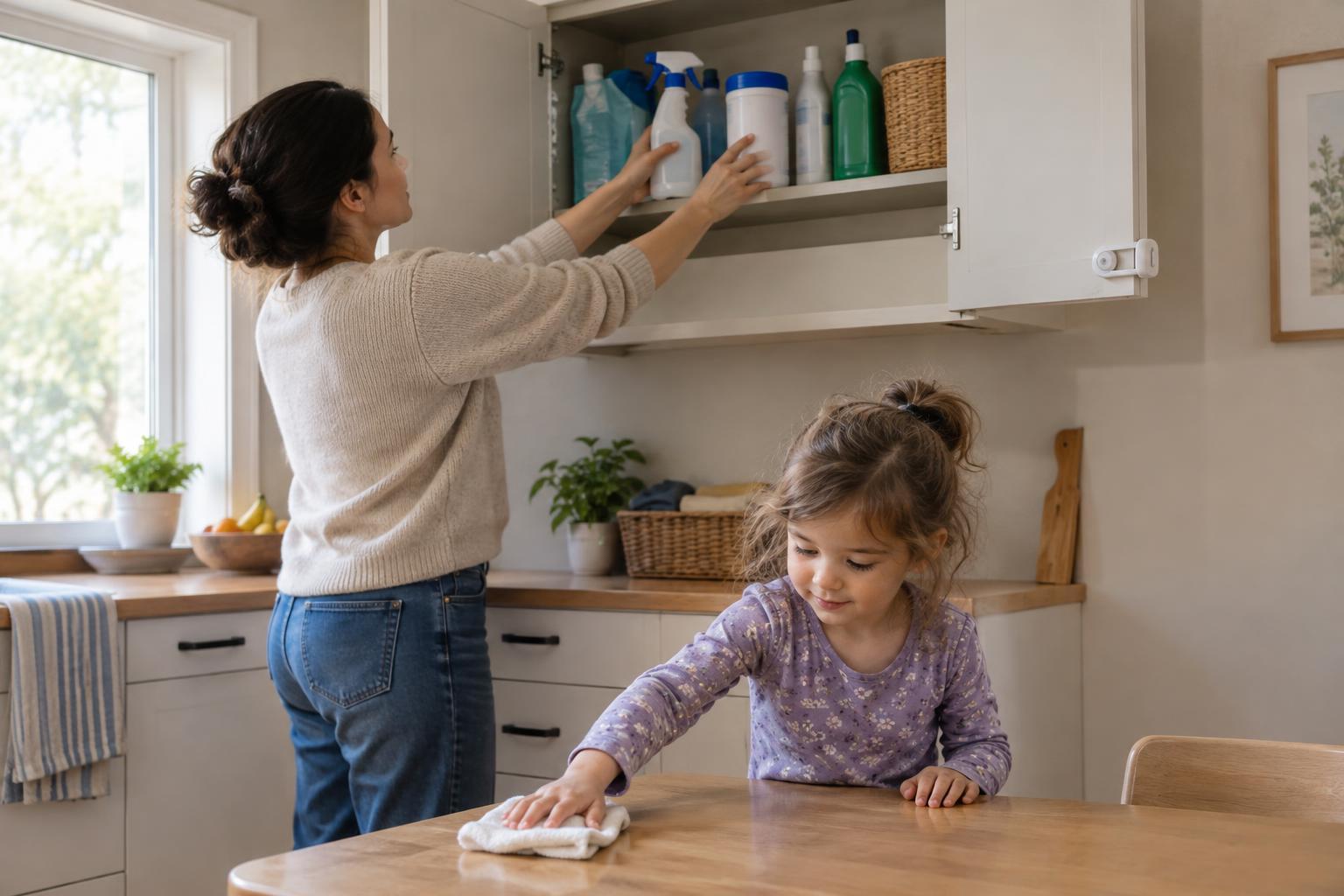
A high shelf may work for a child who cannot climb, but height alone may be less useful once a child can move a chair or reach a shelf from a counter. A secured cabinet or other storage area that children cannot access is generally a more dependable choice for supplies used often. Keep the products together where possible, so putting them away takes only one trip.
Think through the whole route, not just the final storage spot. If a product is stored across the house from where it is used, it may be tempting to leave it out until later. Moving storage closer to the cleaning area, while keeping it secured, can make the safer habit easier to maintain. Revisit the arrangement as children grow and learn new ways to explore.
Keep products identifiable and follow their labels
Store cleaning products in their original containers with labels intact. A drink bottle, food jar, or unmarked spray bottle can make a product difficult to identify and may invite a child to handle it. Keep caps and closures properly fastened, including on products described as child-resistant. Child-resistant packaging adds a barrier, but it does not replace secure storage.
Read each product’s label for its storage and use directions. Some products call for particular precautions, and directions can differ. Avoid combining cleaning products unless the label specifically directs you to do so. Keeping refill containers secured matters as much as storing the smaller bottles used day to day.
Build a put-away step into every cleaning task
Many supplies are left out for only a moment: while someone answers the door, helps with a snack, or moves to another room. Make putting the product away part of finishing a task, alongside rinsing a cloth or returning a brush. If cleaning is interrupted, close the container and put it in its storage place before turning to something else.
During use, keep products with you rather than leaving them unattended in a room children can enter. Afterward, check nearby surfaces for bottles, wipes, or refills. Other adults and older children who help with household tasks can use the same storage place and put-away routine. A shared, simple system is easier to follow than one that depends on remembering a different rule for every room.
Make room for children to help in safer ways
Children may want to copy household work, especially when cleaning is part of an ordinary family routine. You can offer age-appropriate tasks that do not involve handling cleaning products, such as putting toys in a basket or wiping a table with a cloth dampened with water. Store the cleaning products separately from any items set aside for children to use.
A brief household check can help the plan keep working: notice where products were left after a busy day, whether a storage area still closes properly, and whether a newly mobile child can reach something they could not reach before. If a child may have swallowed or been exposed to a cleaning product, use the product label and contact a local poison information service or emergency service for immediate guidance.