Make a simple plan before play begins
A playground visit often feels different to children and adults. An adult may be watching the time, thinking about dinner or planning the walk home. A child may be fully occupied with a game that has no obvious ending. Before play begins, offer a short, concrete plan: “We’ll play, have a drink, choose one last thing to do, and then walk home.” A predictable sequence gives children something to recognize when it is time to leave.
Choose a plan that fits your child’s age and the day you are having. A younger child may understand “after the snack” better than a number of minutes. An older child may appreciate knowing roughly when you need to go and having a say in how to spend the visit. Keep the plan flexible enough for ordinary surprises, such as waiting for a turn on the swings. If the timing changes, say so plainly rather than pretending the original plan still applies.
Give a warning that leads somewhere
A warning is most useful when it tells a child what comes next. Instead of calling “time to go” from across the playground, move closer and say, “You can finish this climb, then we’ll get our things.” If your child is engaged in a group game, allow a reasonable moment to tell the other children they are leaving. This does not mean extending the visit indefinitely; it gives the play a recognizable stopping point.
Some families find it helpful to use the same small sequence each time: a last activity, a drink of water, then shoes or coats. You can offer a limited choice within that sequence, such as “One last slide or one last swing?” Choices work best when both options are genuinely possible. If you need to leave immediately, a clear explanation is kinder than offering a choice you cannot honor.
Expect feelings without changing the boundary
Even with advance notice, a child may be upset. Disappointment does not necessarily mean the plan failed. You can acknowledge what they wanted while staying clear about what happens next: “You wish we could stay longer. It’s hard to stop when you’re having fun. We’re going home now.” A calm, brief response often leaves more room for a child to process the change than a long argument about why leaving is necessary.
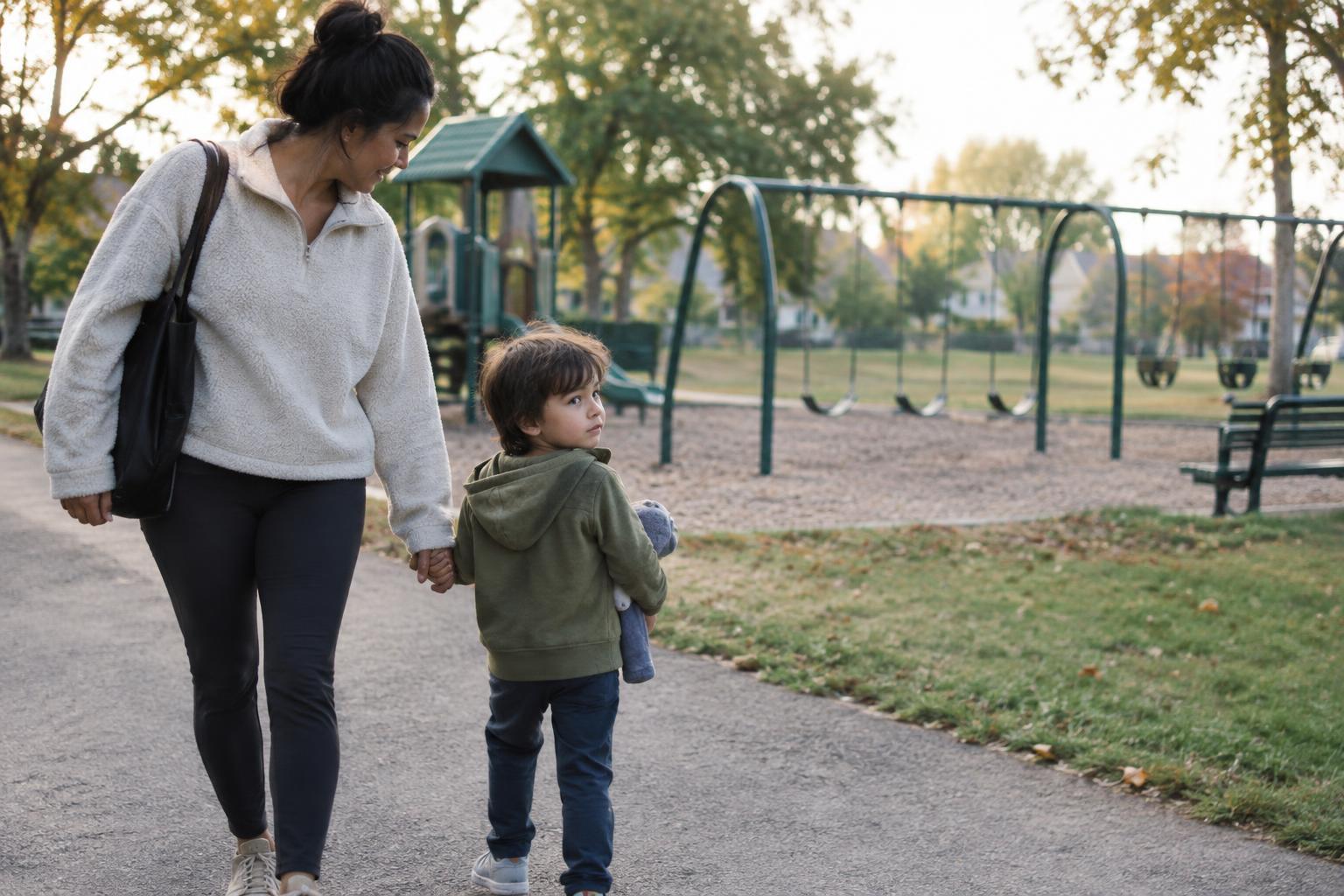
Children vary in what helps at that moment. One may want a hand to hold; another may need a little space while you stay nearby. Younger children may need help moving through the steps of leaving, such as collecting a toy and walking to the gate together. Older children may respond better to being included in a practical task. If a child is overwhelmed, focus first on getting everyone safely out of the playground rather than teaching a lesson on the spot.
Give the journey home its own rhythm
Leaving can feel abrupt if the only appealing part of the outing is the playground itself. A familiar activity on the way home can make the next step easier to picture. You might look for a particular tree, talk about one favorite moment from the visit or let your child carry a small item they brought along. The aim is not to promise a reward for leaving; it is to make the journey a regular part of the outing.
Practical details matter, too. Check for water, clothing and belongings before announcing the final activity so you are ready to go when it ends. If the route home is long, consider whether your child will be hungry, tired or ready for a quieter pace. A routine that works on a relaxed morning may need to be shorter after a busy day. Adjusting the plan is not giving up on it.
Use each visit to learn what fits
After a difficult departure, wait for a settled moment before talking about it. You might say, “Stopping at the swings was hard today. What could we try next time?” Keep the conversation simple and invite ideas without placing the whole responsibility on your child. Perhaps the warning came too late, the last activity was hard to finish, or the trip home felt especially tiring.
Look for small patterns rather than expecting every visit to go smoothly. A shorter visit, a different last activity or more time for goodbyes might help. When a transition does go well, name what happened: “You finished your turn and came to the gate with me.” Over time, a familiar plan and a flexible response can help playground departures become an ordinary part of going out together.