Start with a small, familiar space
A toddler who is just learning to explore does not need a large playground to have an interesting outing. A yard, a quiet corner of a park or a short stretch of sidewalk can provide changing sounds, textures and sights. Begin somewhere you can see the boundaries clearly and stay close as your child moves. A familiar space also makes it easier to notice what attracts their attention today.
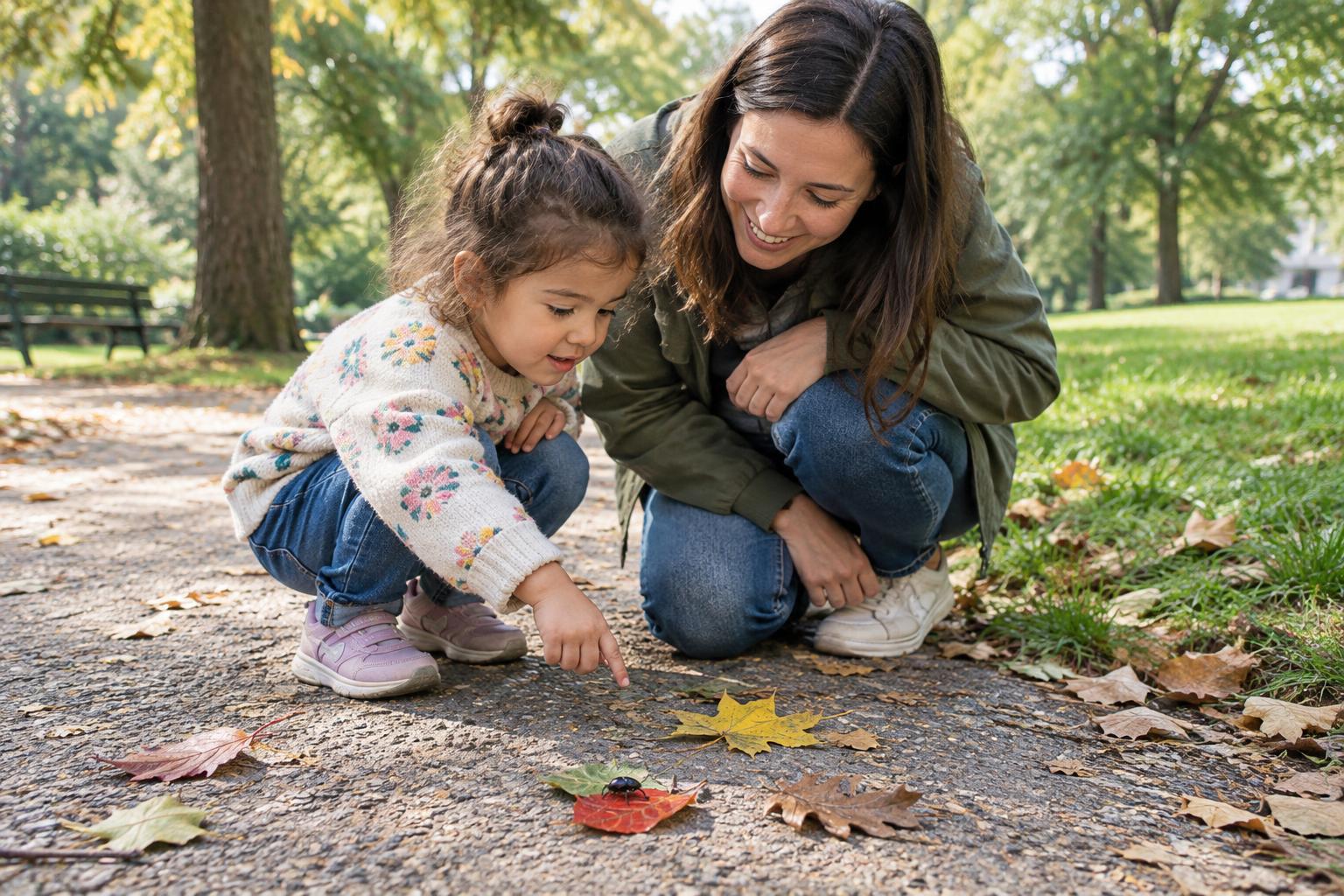
Try a slow walk with no destination to reach. Pause when your toddler stops to look at a leaf, listen to a bird or watch a shadow. You can name what they notice in a few simple words: “That leaf is moving” or “Your shadow is beside you.” There is no need to turn every pause into a lesson. Time to look, point and move on is part of the activity.
Make room for touching and carrying
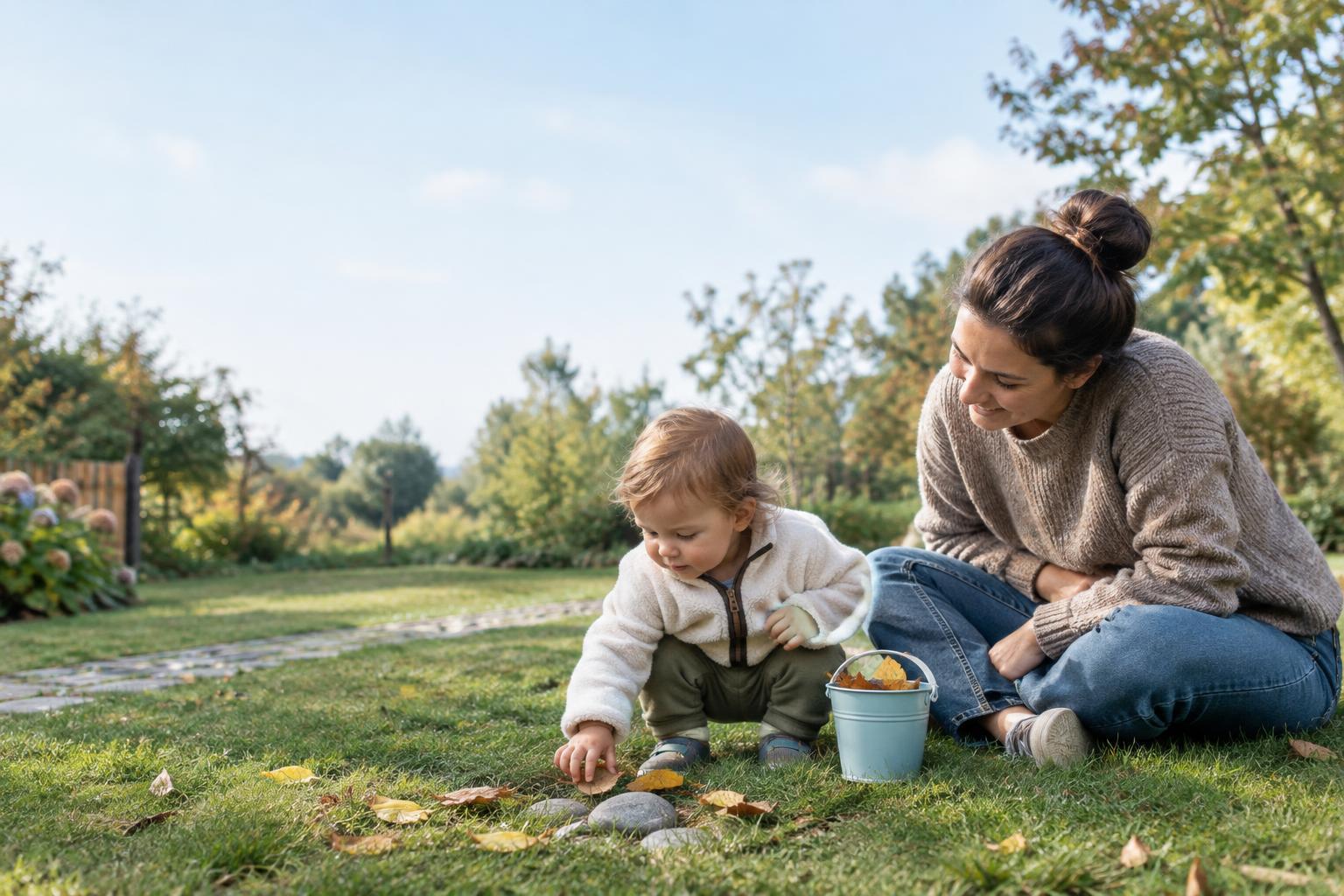
Toddlers often explore by picking things up, putting them down and carrying them somewhere else. Offer a small bucket or container for safe, sturdy finds such as fallen leaves, large smooth stones or pinecones. Choose items with your child and check them first for sharp edges, small loose pieces or anything they might put in their mouth. Leave plants and objects that are unfamiliar or best left undisturbed where they are.
The container can become the whole game. Your toddler may fill it, empty it and start again, or carry one favorite leaf for the rest of the walk. If collecting is not appropriate where you are, try a “look and leave” walk instead. Point to different colors or shapes without taking anything home. Either approach gives a toddler a simple way to make choices and revisit what interests them.
Try easy movement games
Simple movement invitations work well outdoors because toddlers can try them in their own way. Walk together from one tree to another, step over a line drawn with sidewalk chalk or roll a soft ball back and forth on a flat patch of ground. You can also copy each other: take two slow steps, crouch down, stand up and wave. Keep the game flexible rather than asking for a particular result.
Different toddlers will approach the same space differently. One may want to walk across the grass repeatedly; another may prefer to stand still and watch. Offer a hand when needed, choose surfaces that suit your child’s current steadiness and give them room to stop. If an activity becomes frustrating or the area gets busy, changing the game is fine. Exploring is not a test of how far or fast a toddler can go.
Use water and weather as gentle invitations
On a suitable day, a shallow tray of water and a few cups can turn an outdoor spot into a place for pouring and splashing. Place it on stable ground, use only a little water and remain within arm’s reach throughout play. Empty the tray when you are done. If water play is not convenient, a dry brush and a container of clean sand or soil can invite similar scooping and moving.
Weather offers activities of its own. After rain, your toddler might watch drops fall from a branch or step in a puddle while wearing appropriate shoes. On a breezy day, hold a scarf together and notice how it moves. Check the conditions before heading out, dress for the temperature and keep the outing short enough to remain comfortable. The goal is to notice the outdoors, not to stay out for a set amount of time.
Follow their lead and keep the routine simple
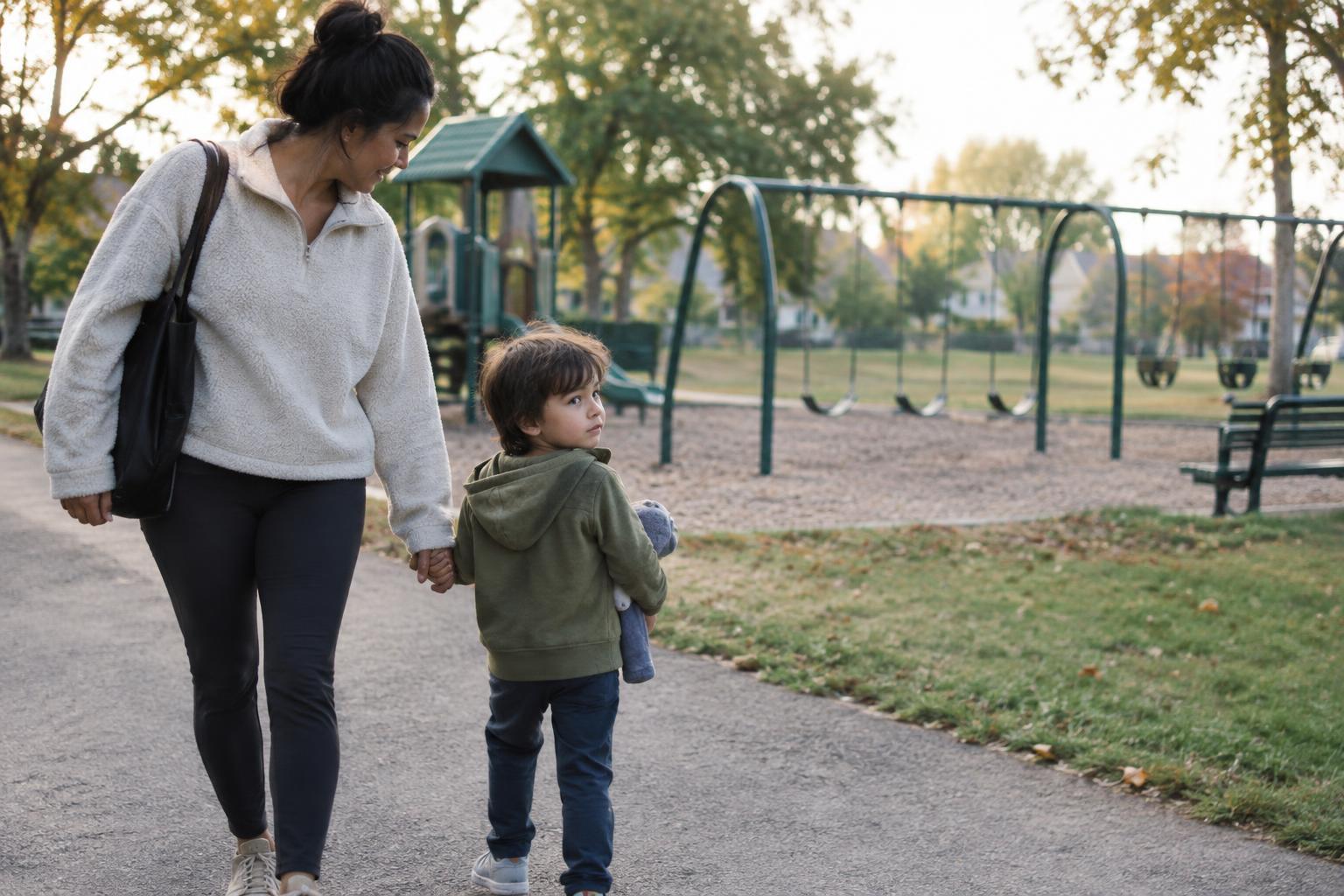
An outdoor activity often works best when it has a loose plan and an easy ending. You might decide to walk to one familiar spot, spend a little time playing and return home. Bring what your family usually needs for a short outing, such as water, weather-appropriate clothing and a way to clean hands before eating. In shared spaces, check the ground for hazards and stay close enough to respond when your toddler changes direction.
Before leaving, give a simple cue: “One more look, then we’re going home.” Your toddler may still need help with the transition, especially if they are absorbed in something new. Back at home, you can talk about one thing you saw together or place a collected leaf where they can look at it again. Small, repeatable outings give toddlers another chance to explore the same place and notice something different.