Start with a place you already have
An outdoor challenge does not need to look like an organized game. It can be a question that gives a familiar place a new purpose: What can we notice on this walk that we missed last time? Where could we find three different kinds of shade? A sidewalk, shared courtyard, playground or quiet corner of a park can all offer enough variety to begin.
Choose boundaries that make sense for the setting, and agree on them before the challenge starts. For a younger school-age child, that might mean staying where an adult can see them. An older child may enjoy helping choose the route or setting a time to regroup. Keep the invitation short and adjustable; stopping after ten enjoyable minutes can work better than stretching an activity until everyone is tired.
Turn observation into a mission
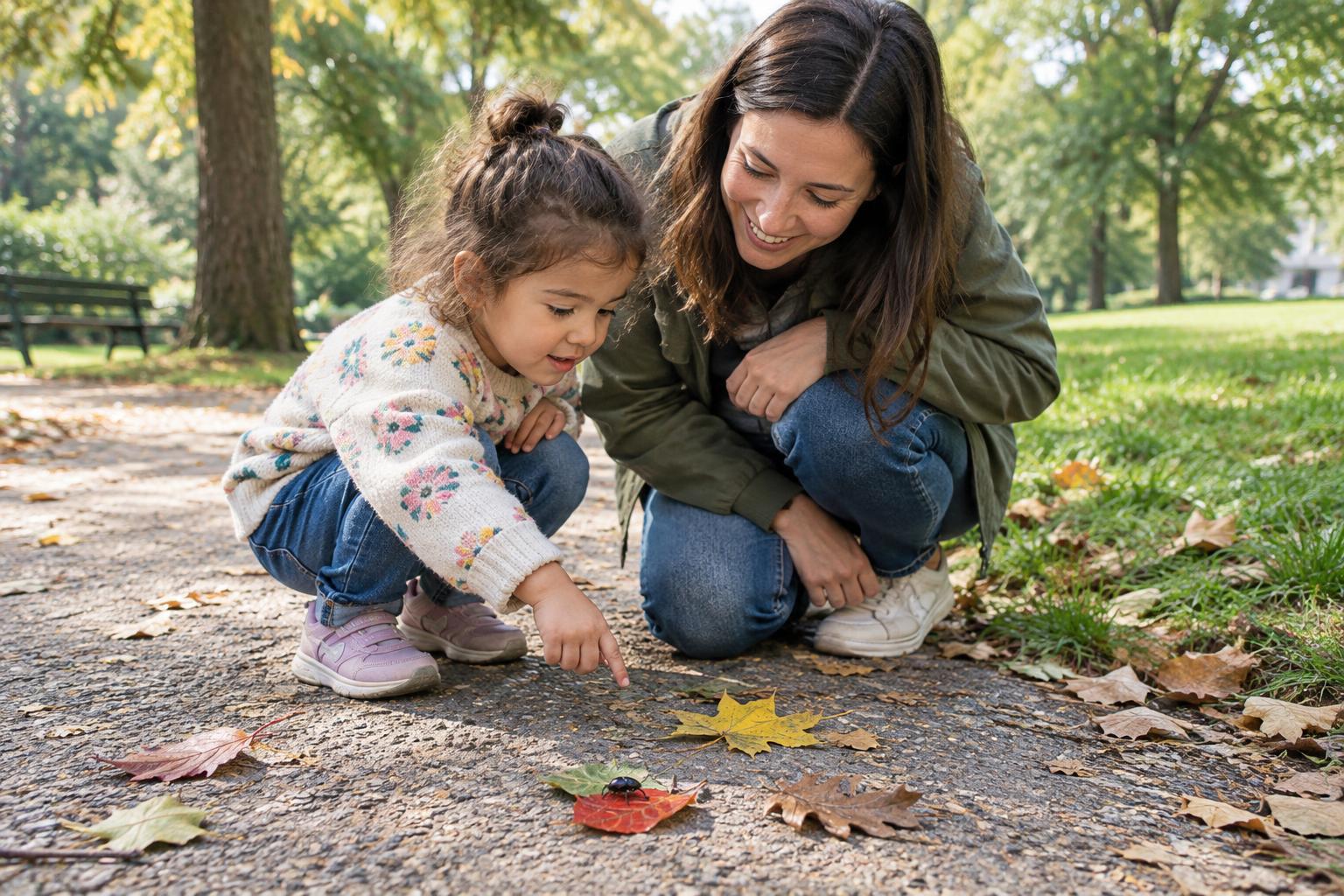
Try a “tiny changes” challenge on a route you use often. Ask children to find something that has changed since their last visit, such as a new leaf, a shifted shadow or a puddle that has dried. They can describe what they see aloud, point it out to someone else or remember it for a conversation at home. There is no need to collect anything or identify every plant and insect.
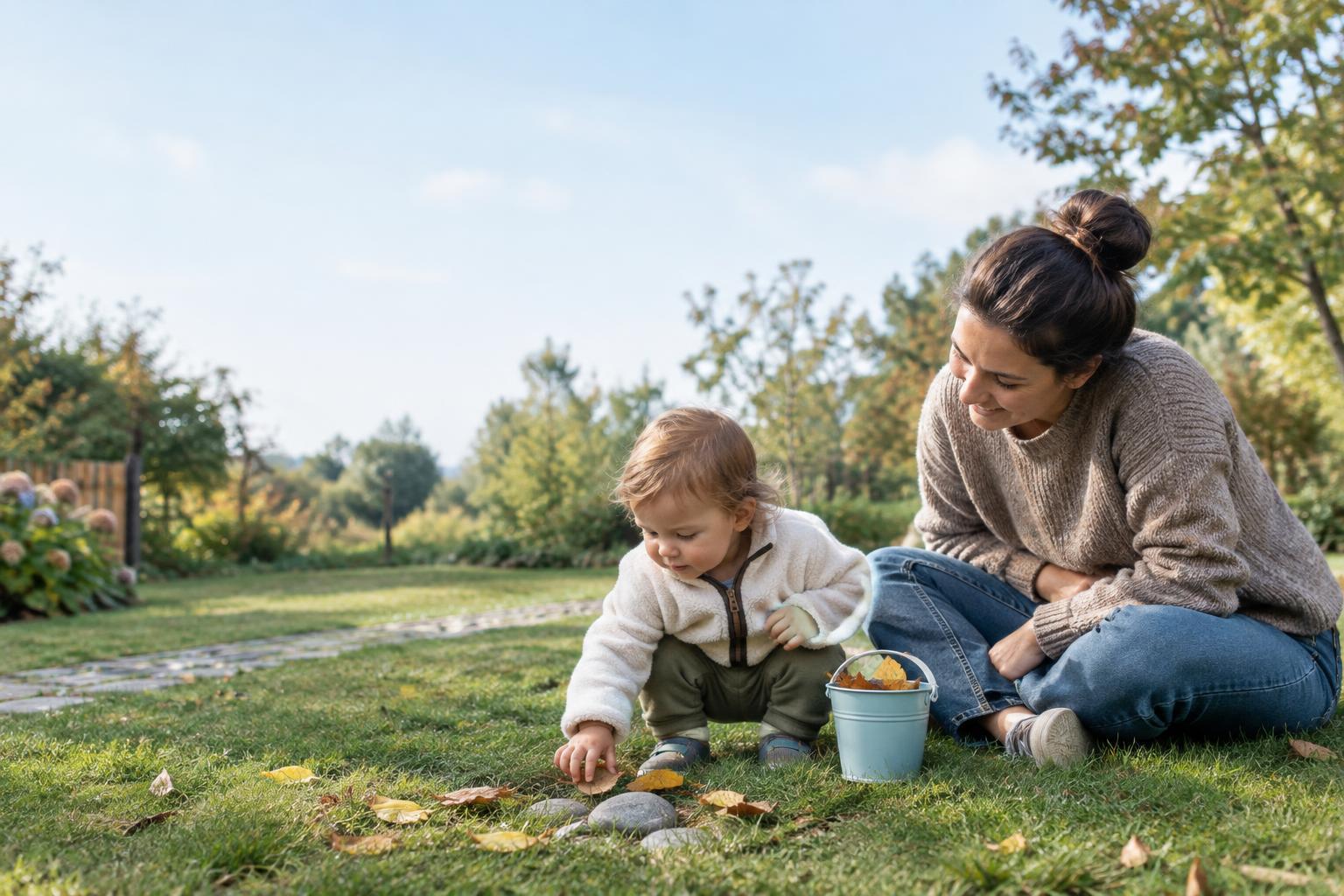
Another option is a senses walk. Take turns choosing a prompt: find a rough-looking surface, listen for two different sounds or spot a color in an unexpected place. Remind children to look without touching unfamiliar plants, animals or objects. If an answer is hard to find, change the prompt together. The aim is attentive exploration, not completing a perfect list.
Add movement without making it a race
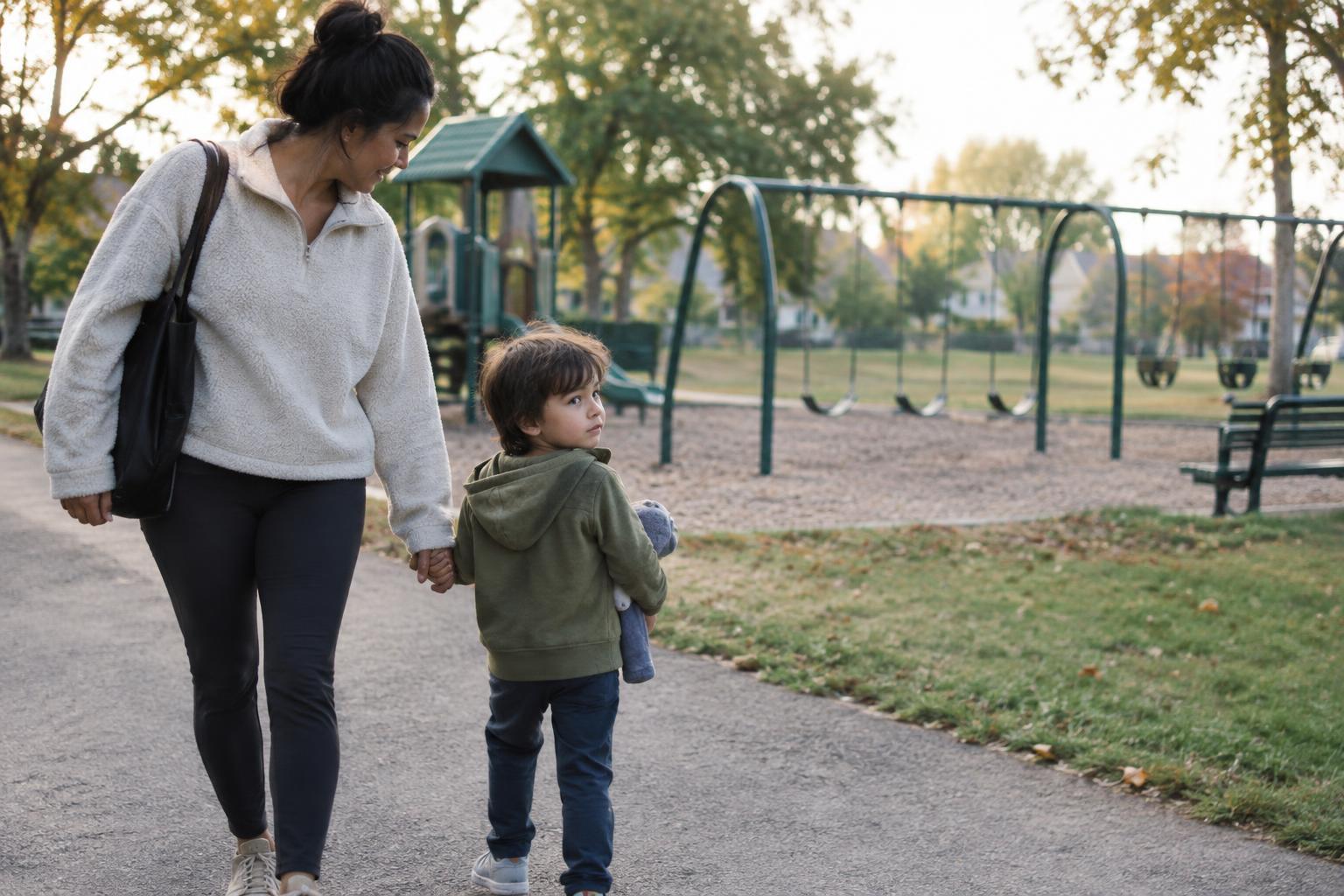
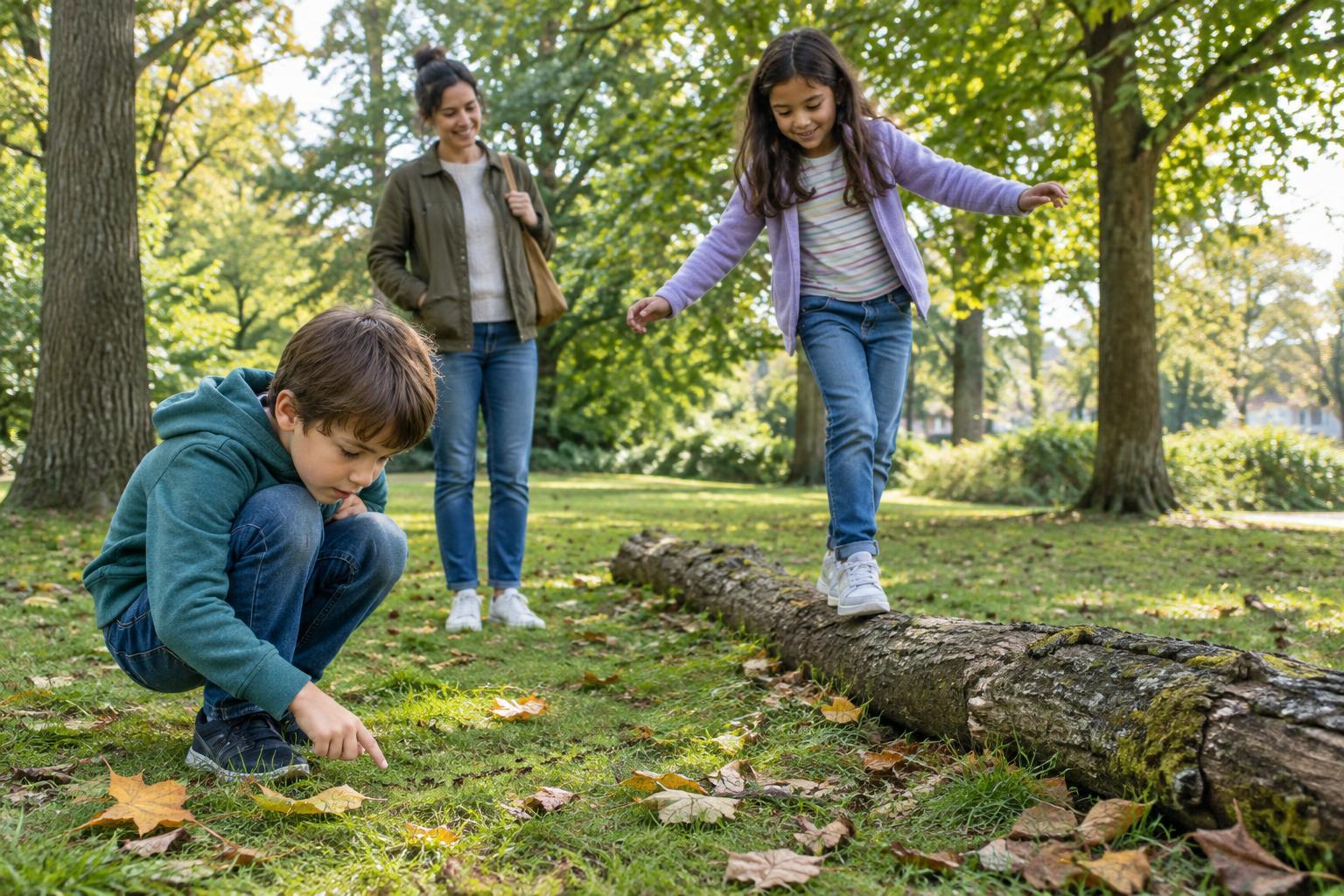
Movement challenges can fit the space and the child. On a clear path, invite them to travel between two points in three different ways: with long steps, with quiet steps and with steps that match yours. At a playground, they might invent a route that includes going around, under and beside familiar features. Check the area for other people and obstacles first, and let children skip a movement that does not feel comfortable.
For a cooperative version, try “follow my route.” One person leads through a short, safe sequence of turns and pauses; the other follows and then becomes the leader. Children can make the route easier or more complicated, depending on their interest. Taking turns gives them room to plan and explain their choices without requiring a winner.
Build stories from what is already there
A storytelling challenge can begin with a landmark: a tree, a painted line or an interesting doorway seen from a public path. Ask, “If this were the start of a story, what might happen next?” Walk to another spot and add a new part. One child might invent an adventure, while another prefers a realistic story about a person walking home. Both approaches count.
Children who like designing can create an imaginary tour instead. Ask them to choose three stops and give each one a name, then guide the family between them. They can explain why a particular view, sound or shape deserves a stop. This gives a child some ownership over an ordinary outing while leaving the place as they found it.
Keep the challenge flexible
Offer a choice between two prompts rather than announcing a long plan. A child who is ready to move might pick a route challenge; one who wants a slower outing might choose observation or storytelling. Mixed-age groups can work on the same idea at different levels: one child spots shapes while another describes how those shapes change along the path.
Weather, access and energy levels will affect what works. Stay in a suitable area, follow local rules and adjust for heat, cold, traffic or uneven ground. If a challenge loses its appeal, let it go. The most useful habit is not finishing every mission; it is showing children that time outdoors can make room for their own questions, ideas and ways of playing.