Start with the routines, not the furniture
Before moving beds or buying storage, notice what each child actually does in the room. One may need a quiet place to read after the other falls asleep. A younger child may dress with help, while an older child wants to choose clothes independently. Write down the activities the bedroom needs to support: sleeping, dressing, reading, playing, storing belongings and perhaps doing homework. This makes it easier to give limited floor space a clear purpose.
Ask children who are old enough what feels difficult about sharing. Their answers may be more useful than a perfect-looking room plan. A child who says, “I can’t find my things,” may need a dedicated drawer rather than a larger bedroom. Treat the first layout as a trial. Living with it for a week or two can reveal which paths, shelves and routines need changing.
Give each child a place that feels like theirs
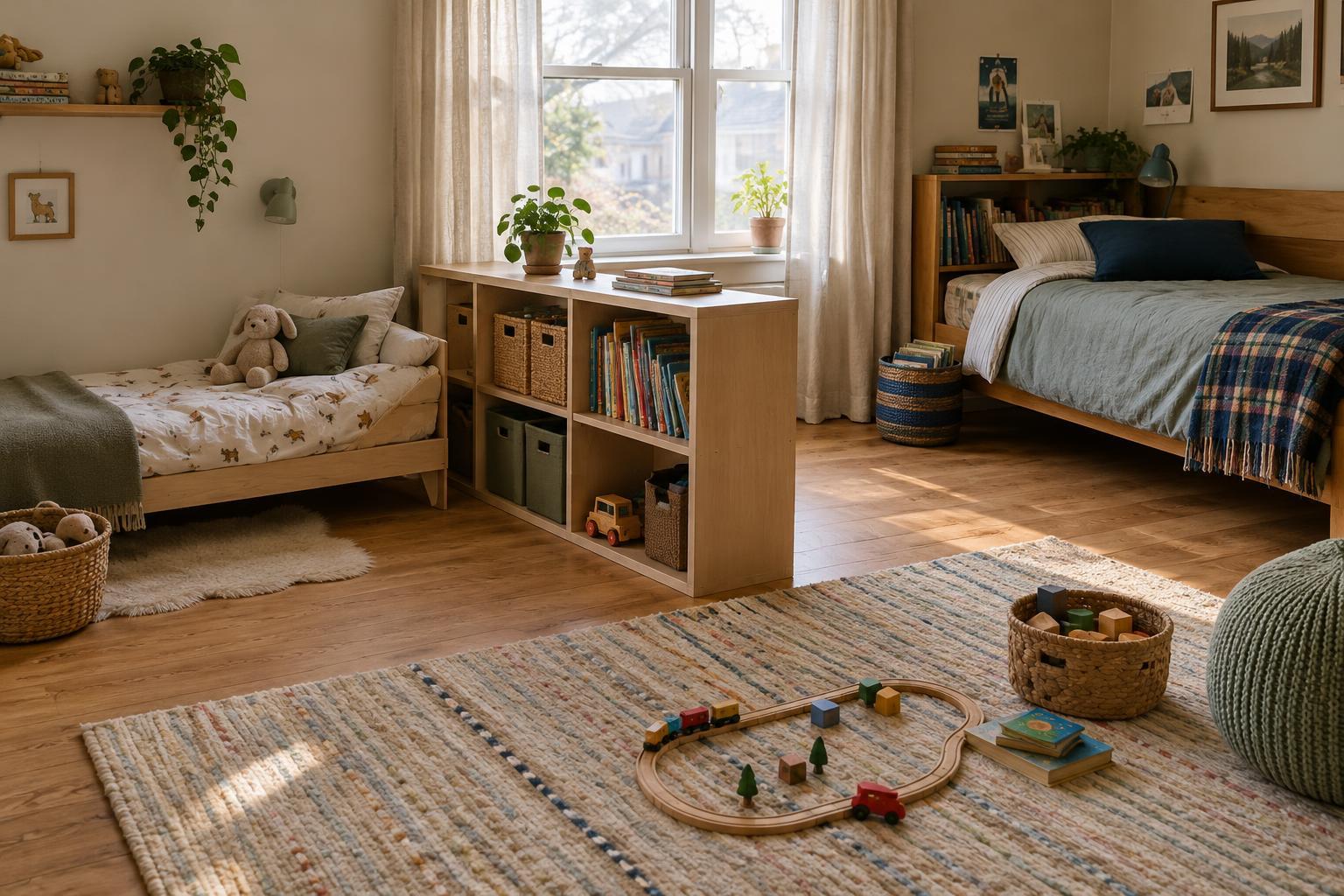
A shared room does not have to be divided equally down the middle to feel fair. Each child can have a recognizable area for everyday belongings: a drawer, a shelf, a bedside basket or a section of the wardrobe. Labels with words or pictures can help everyone put things back. If the room allows it, position beds so each child has a little space beside them for a book or a familiar comfort item.
Personal space matters especially when ages and interests differ. An older child may want to keep a project undisturbed, while a younger sibling may see it as an invitation to play. A high shelf or closed container for works in progress can reduce that conflict. Let children make some small choices about their areas, such as where to display drawings, while keeping shared decisions about walkways and furniture placement with the adults.
Store things by who can use them
Storage is easier to manage when it reflects both age and access. Keep frequently used clothes and age-appropriate toys where their owners can reach them. Put items that need adult help, as well as small pieces that are not suitable for a younger child, in secure storage outside that child’s reach. This is often more practical than expecting siblings to remember separate rules for every toy in an open bin.
Consider a small shared collection for activities the children enjoy together, with separate containers for individual interests. Clear categories such as blocks, dress-up clothes and books make cleanup less of a guessing game. Leave some empty space in drawers or bins so children can put things away without carefully packing every item. Periodically sorting outgrown clothes and unused materials helps the room keep working as the children change.
Make room for different kinds of play
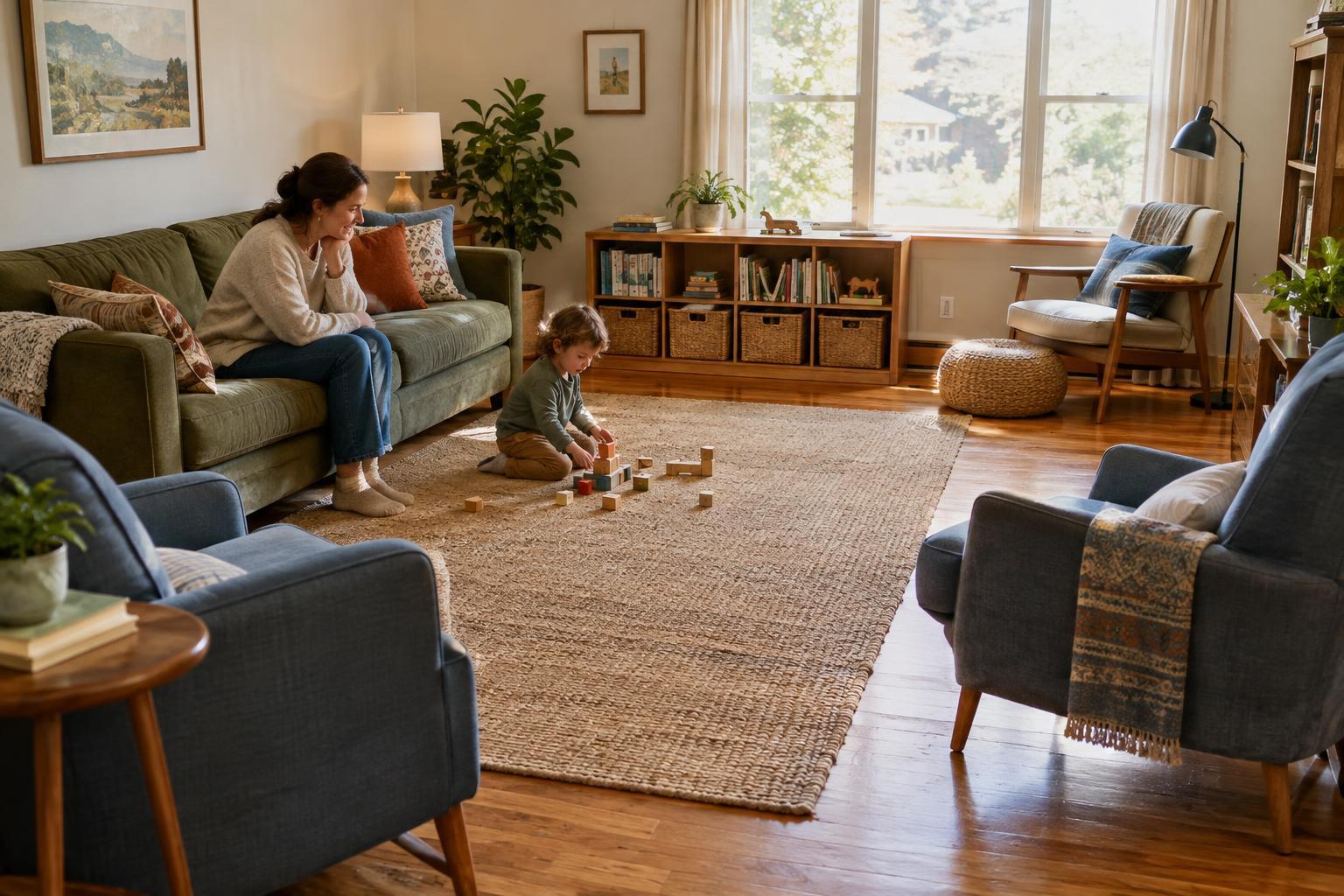
Children of different ages may want to use the same floor in very different ways. A clear patch of floor can serve for building or pretend play during the day, then return to a calm bedroom at night. If an older child needs a surface for drawing or projects, a compact desk or table can mark that activity as separate from floor play. Materials can come out when needed rather than staying spread across the room.
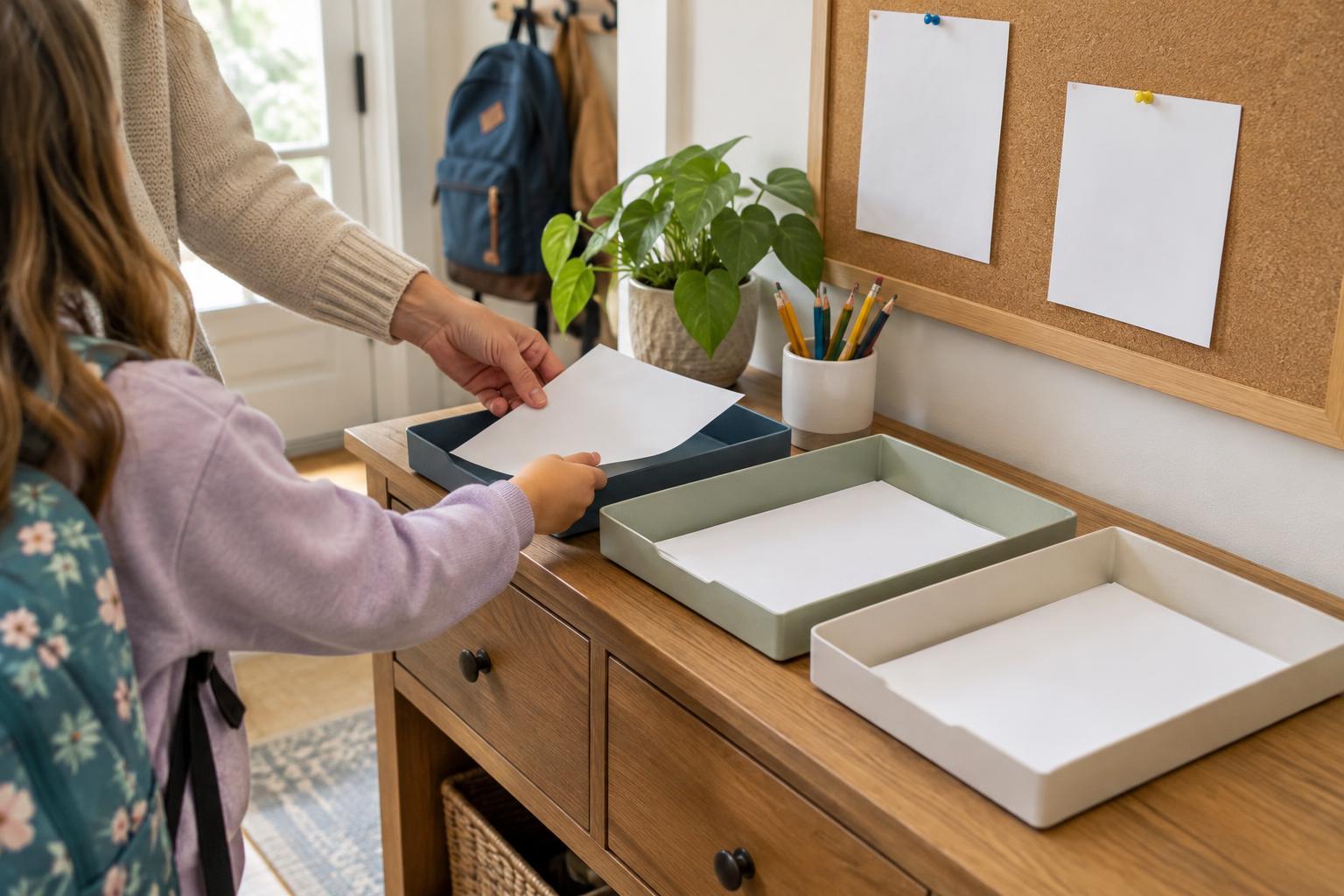
Simple agreements can protect both shared play and individual work. For example, everyone may use the building blocks, but each child asks before changing another person’s unfinished creation. A tray or designated shelf gives a project somewhere to wait. When disagreements happen, the room setup can help: visible places for shared items and personal items make the boundary easier to understand than a rule that exists only in conversation.
Plan for bedtimes that do not match
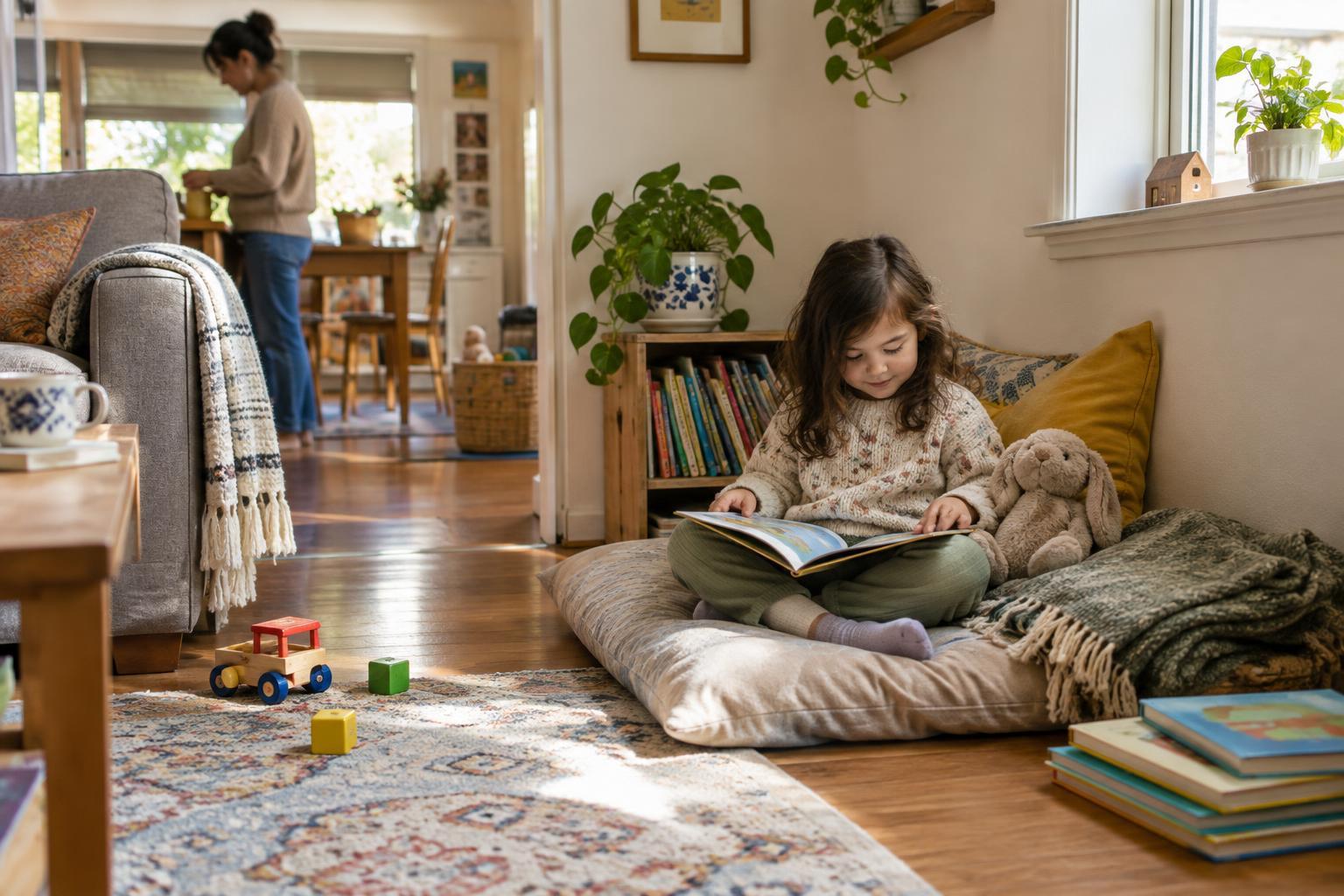
Different ages often mean different evening rhythms. Keep pajamas, bedtime books and other nightly essentials easy to find so one child’s routine does not require searching through the whole room. A reading light aimed at one bed may help an older child enjoy quiet time while a sibling settles, provided its placement works for everyone. If one child goes to bed earlier, prepare the other child’s clothes or supplies before lights-out to reduce interruptions.
No layout will prevent every disturbance, so focus on habits as well as furniture. Talk through what children can do if they wake before their sibling, and choose a place outside the bedroom for louder early-morning activities when possible. Revisit the arrangement as schedules and interests shift. A shared bedroom works best as an adaptable space, not a setup that has to remain perfect for years.