Start with a flexible plan
A good outdoor outing does not need a packed itinerary. Before leaving, consider where your family can find shade, how you will carry drinks, and where everyone can pause. A short visit to a nearby park may be more enjoyable than a longer trip with no comfortable place to stop. If you can, choose a route that makes it easy to head home when children have had enough.
Think of shade, water, and rest as part of the activity rather than interruptions to it. Children may move between energetic play and quiet observation without warning. Planning for both gives you room to follow their interest while keeping the outing manageable for the adults, too.
Choose a shady base
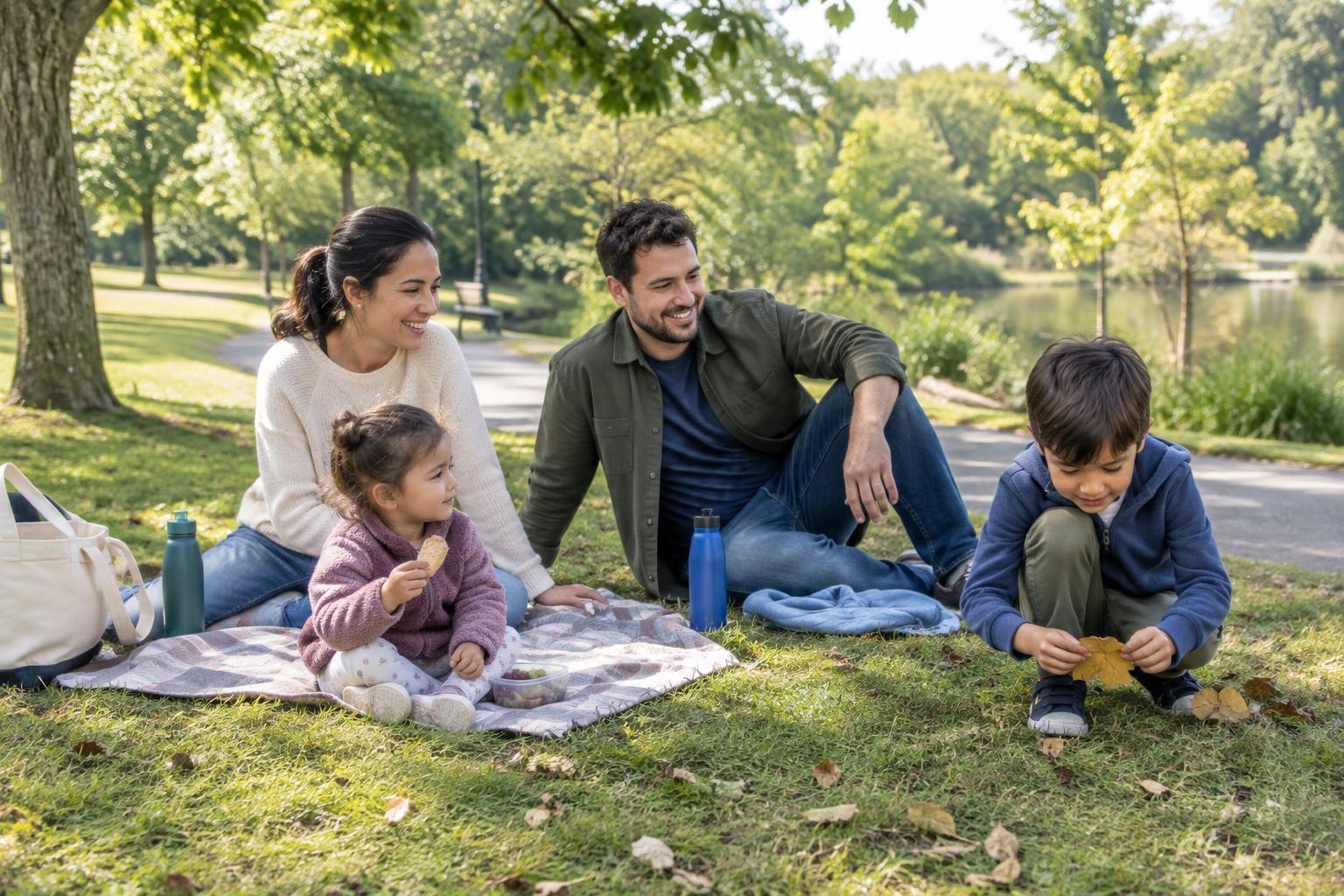
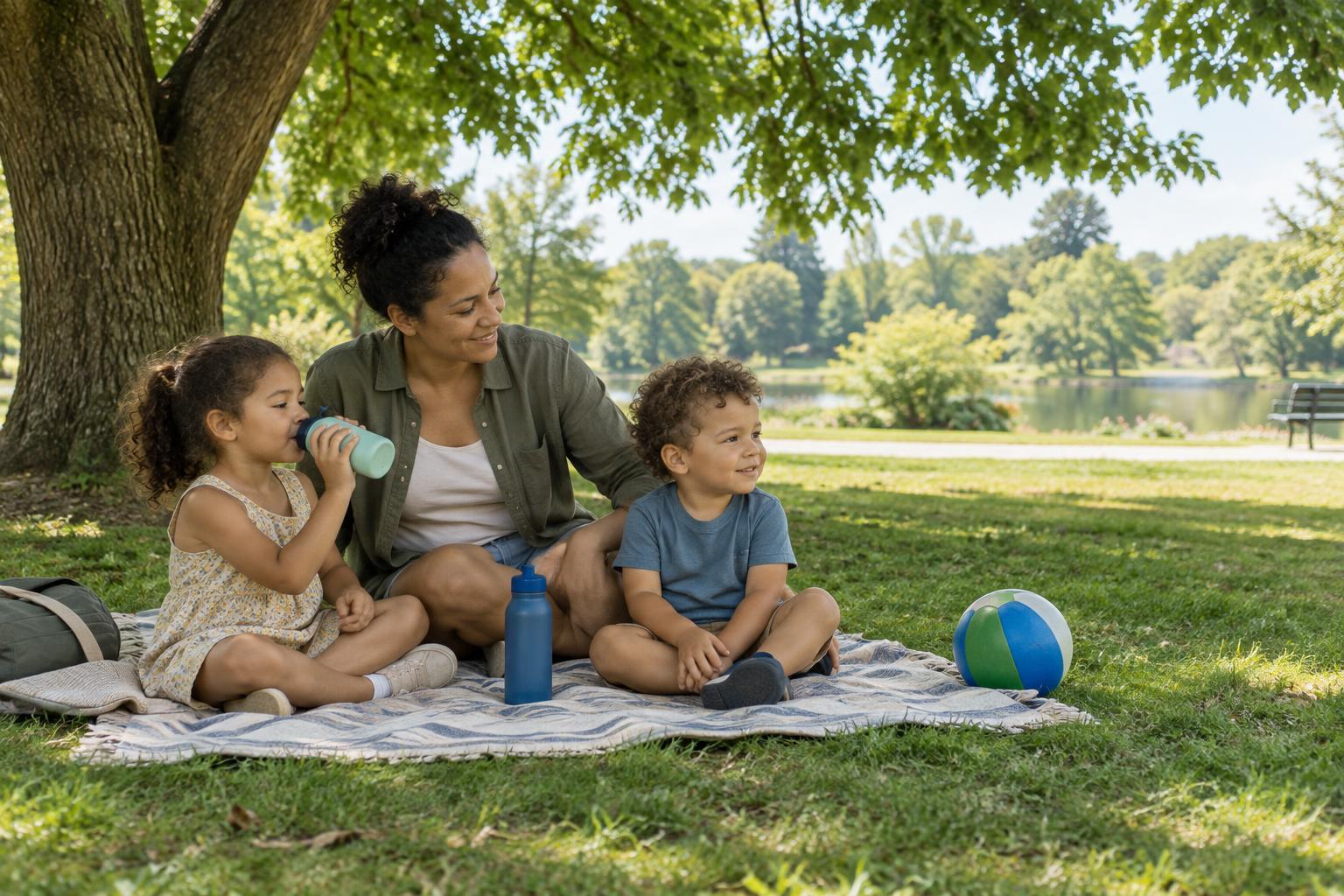
Look for a place to settle before play begins: a tree, a covered bench, or another sheltered spot within easy reach of the activity. A familiar base gives children somewhere to return for a drink, a snack, or a quieter moment. Check whether the shade still covers the space as the day goes on; a comfortable spot at arrival may become sunnier later.
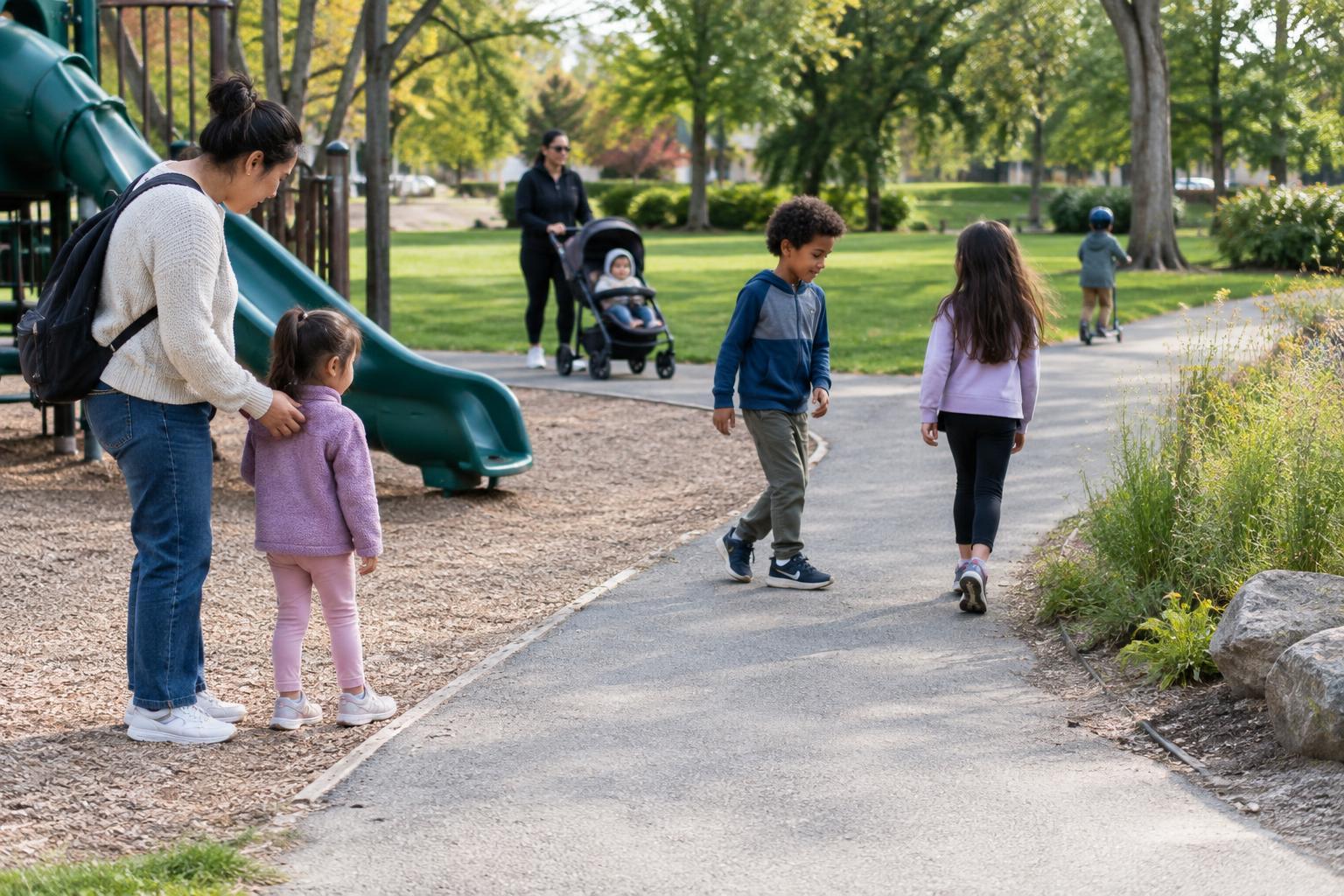
Shade is useful even when the sky looks cloudy, but it does not make every outdoor condition comfortable. Consider how warm the space feels, whether air can move through it, and whether the ground or seating is pleasant to use. With babies and younger children, it can help to choose a play area close to your shady base so moving back and forth is simple.
Make drinks easy to remember
Bring drinks in containers your family can carry and use without fuss. Keeping them in an accessible bag pocket is often more helpful than packing them beneath everything else. Offer opportunities to drink during natural pauses, such as after a game, before moving to a new area, or while sitting together in the shade. Older children can help remember where their bottle belongs and bring it back after play.
Plan for the children you are with rather than using one drinking routine for every age. Babies' feeding and drink needs differ from those of older children, so follow their usual feeding guidance instead of applying a toddler's water plan. For longer outings, think ahead about refills and whether the drinks you bring will be enough for the whole group.
Give rest a place in play
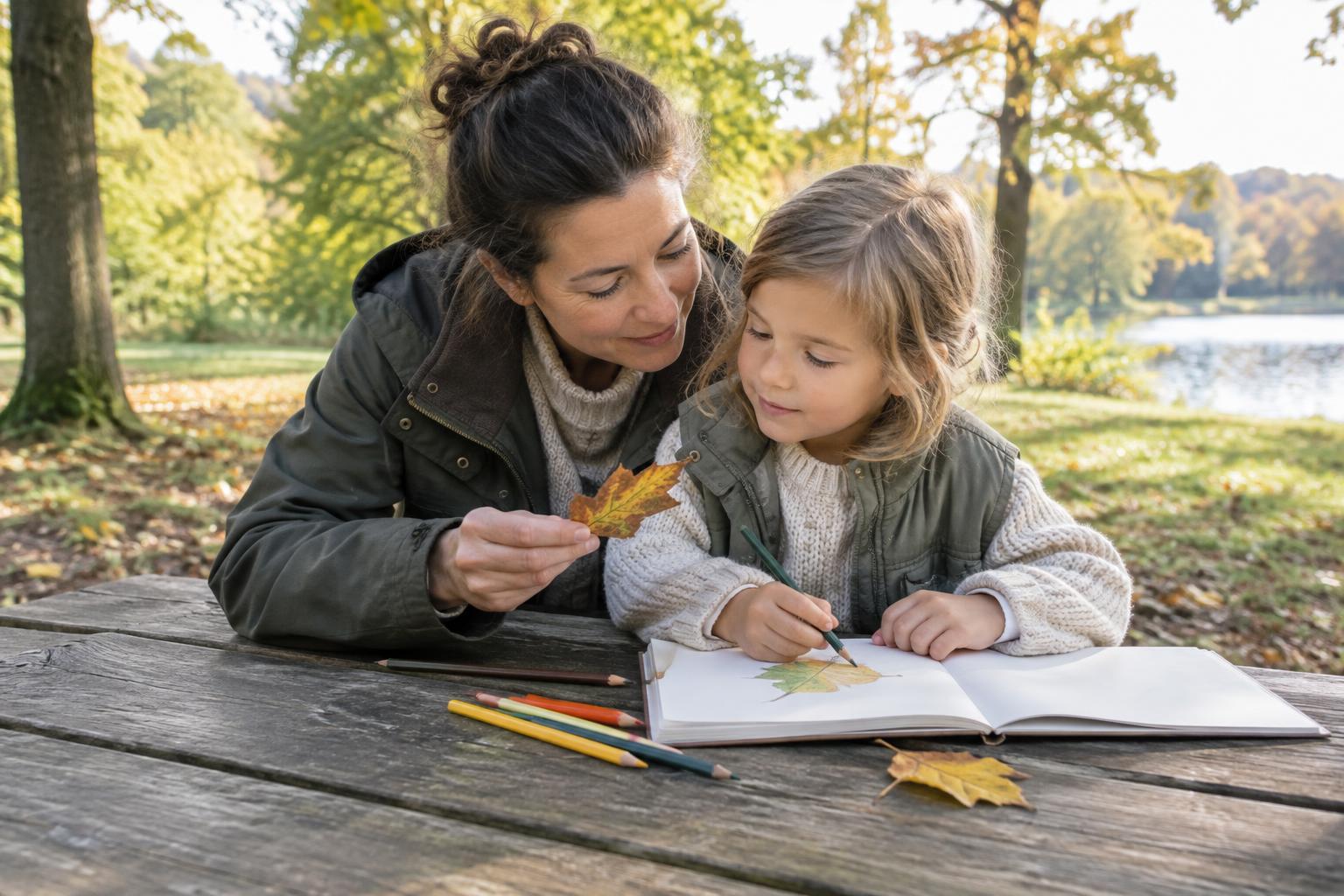
Rest breaks can be invitations rather than announcements that the fun is over. Suggest looking for birds from a bench, reading a small book, or talking about what the children want to explore next. A quiet activity offers a change of pace while keeping everyone connected to the outing. Children who resist sitting still may prefer a slow walk in the shade to a seated break.
Watch how each child responds instead of expecting everyone to stop at the same moment. A younger child may need frequent pauses, while an older child may want to finish a game first. Adults need breaks as well, particularly when carrying bags or supervising several children. If anyone seems unusually tired or uncomfortable, it is reasonable to stop the activity and move somewhere more comfortable.
Keep the plan easy to change
Before you set out, decide on a simple fallback: a shorter loop, an indoor stop, or an earlier trip home. This makes it easier to adjust if the shady area is crowded, drinks run low, or the outing feels less comfortable than expected. On days when conditions do not suit your plan, a brief visit outside may be enough.
Afterward, notice what worked. Perhaps the children used the bench when drinks were placed there, or a slower walk made the return trip easier. Those small observations can shape the next outing. The aim is not to follow a perfect schedule, but to make space for play alongside the shade, drinks, and pauses that help everyone enjoy being outdoors.