Start with the purpose, not a list of rules
Table manners are ways of helping everyone feel comfortable and included. A young child does not need to master a long set of rules before sharing a pleasant meal. Start with a few habits that matter in your household, such as asking for food instead of reaching across someone’s plate, giving others room to speak and helping clear the table.
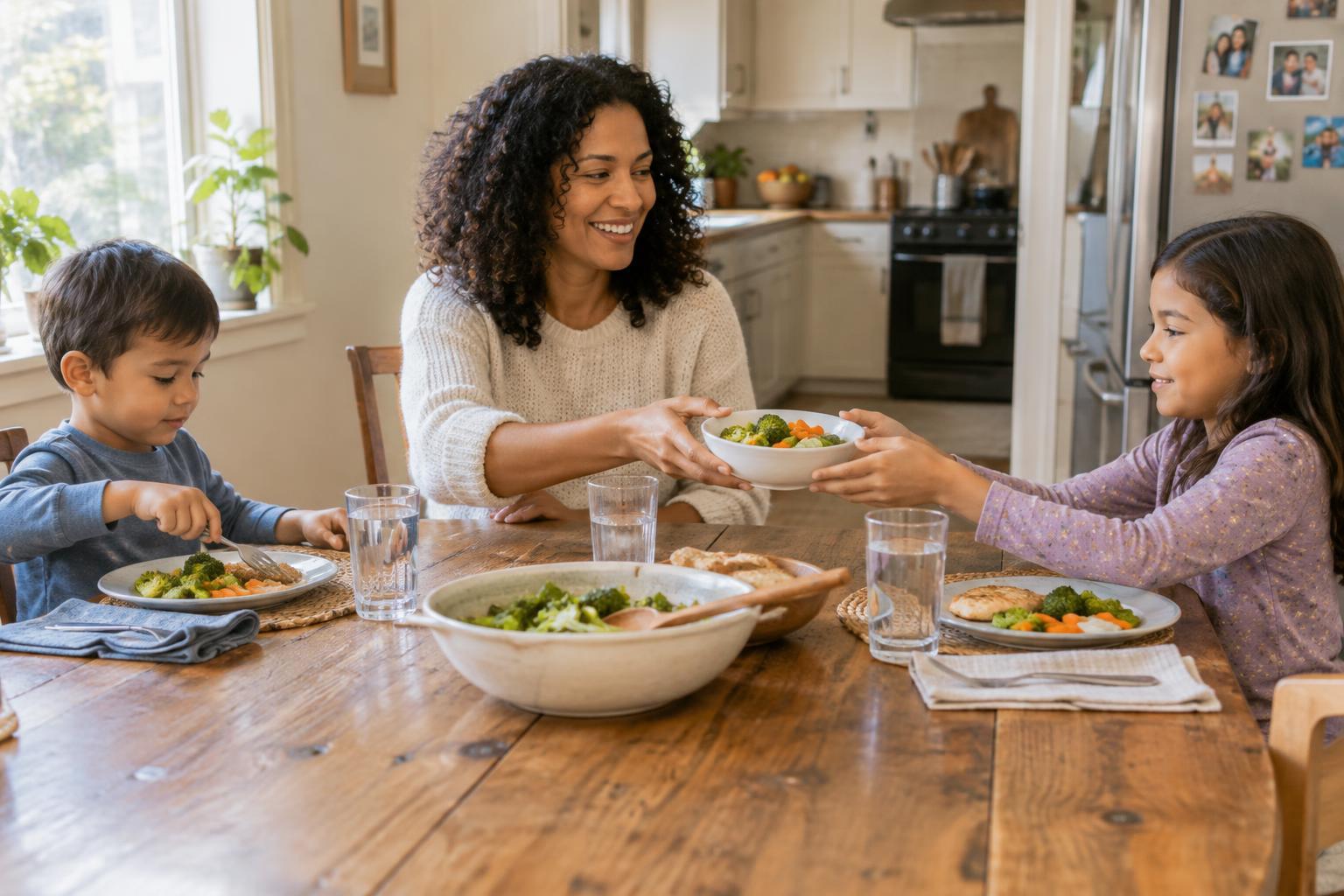
Families eat in different ways. Some share serving dishes, some eat with their hands, and some have quick meals between other commitments. A useful question is: “What helps people enjoy a meal together here?” That gives children a reason for a habit rather than presenting it as a rule with no purpose. It also leaves room to be a considerate guest when another household does things differently.
Let children see the manners you want them to use
Children have many chances to notice how adults speak and act at the table. Say “please” when you ask someone to pass a dish, wait for a pause before joining a conversation and thank whoever helped with the meal. These small examples are easier to copy than a lecture delivered after a mistake.
When a reminder is needed, keep it brief and specific. “Please ask before taking the bowl” gives a child something to do next; “Mind your manners” may not. If you forget a habit yourself, you can simply try again. Seeing an adult correct a small mistake without embarrassment helps keep mealtime practice relaxed.
Match expectations to the child and the moment
Toddlers may be working on sitting for a short stretch, using a cup and learning words or gestures for “more” and “all done.” Preschoolers can practice simple requests and help carry safe items to the table. Older children may be ready to notice when someone else wants a turn to speak or to help serve others. These are starting points, not a timetable: attention, coordination and familiarity with a routine vary from child to child.
The setting matters too. A tired child at the end of a long day may need fewer reminders than they would at a relaxed weekend meal. Choose one habit to practice at a time and acknowledge the effort: “You waited while I finished speaking. Now I’m ready to listen.” It is more useful than expecting every part of the meal to go smoothly.
Build practice into ordinary meals
A predictable beginning can make expectations easier to remember. Before eating, invite everyone to wash their hands and settle in. At the table, a child might help pass a serving dish, ask for what they need or listen while someone shares a small part of their day. At the end, they can take their own cup or napkin to its usual place. Repeating a few manageable steps gives children many chances to participate.
Mealtimes need not become lessons about every spill or interruption. If a cup tips over, invite the child to help wipe it up if they can. If two people begin speaking at once, pause and give each a turn. Short, calm responses show what to do without making an ordinary mishap the focus of the meal.
Keep food and connection separate from performance
Table manners are about how people treat one another, not how much a child eats or whether they like a particular food. A child can speak politely and help with cleanup even when they decide not to taste something. Keeping those expectations separate makes it easier to talk about courtesy without turning every meal into a negotiation over bites.
Guests, celebrations and busy evenings may call for different routines. Before a meal away from home, describe one or two things the child can expect, such as where to put a napkin or how to ask for something. Afterward, notice what went well rather than reviewing every slip. Over time, everyday practice can help children feel more confident sharing a table while leaving plenty of room for conversation, enjoyment and the occasional mess.