Start with the visit you are actually taking
An everyday park visit might mean twenty minutes on the swings, a slow walk to look for interesting leaves, or an afternoon shared with friends. Before packing, think about how long you expect to stay, how far the park is from home and what is available there. A nearby playground with a drinking fountain and toilets calls for a different bag from a longer outing to an open field.
The goal is not to prepare for every possible turn of the day. It is to bring enough that ordinary needs do not end the visit early. A small bag that is easy to carry leaves your hands freer for holding a child’s hand, pushing a stroller or joining a game. Keeping a few reusable basics in the bag between visits can make leaving home simpler, as long as you check and replenish them before you go.
Cover drinks, food and everyday cleanup
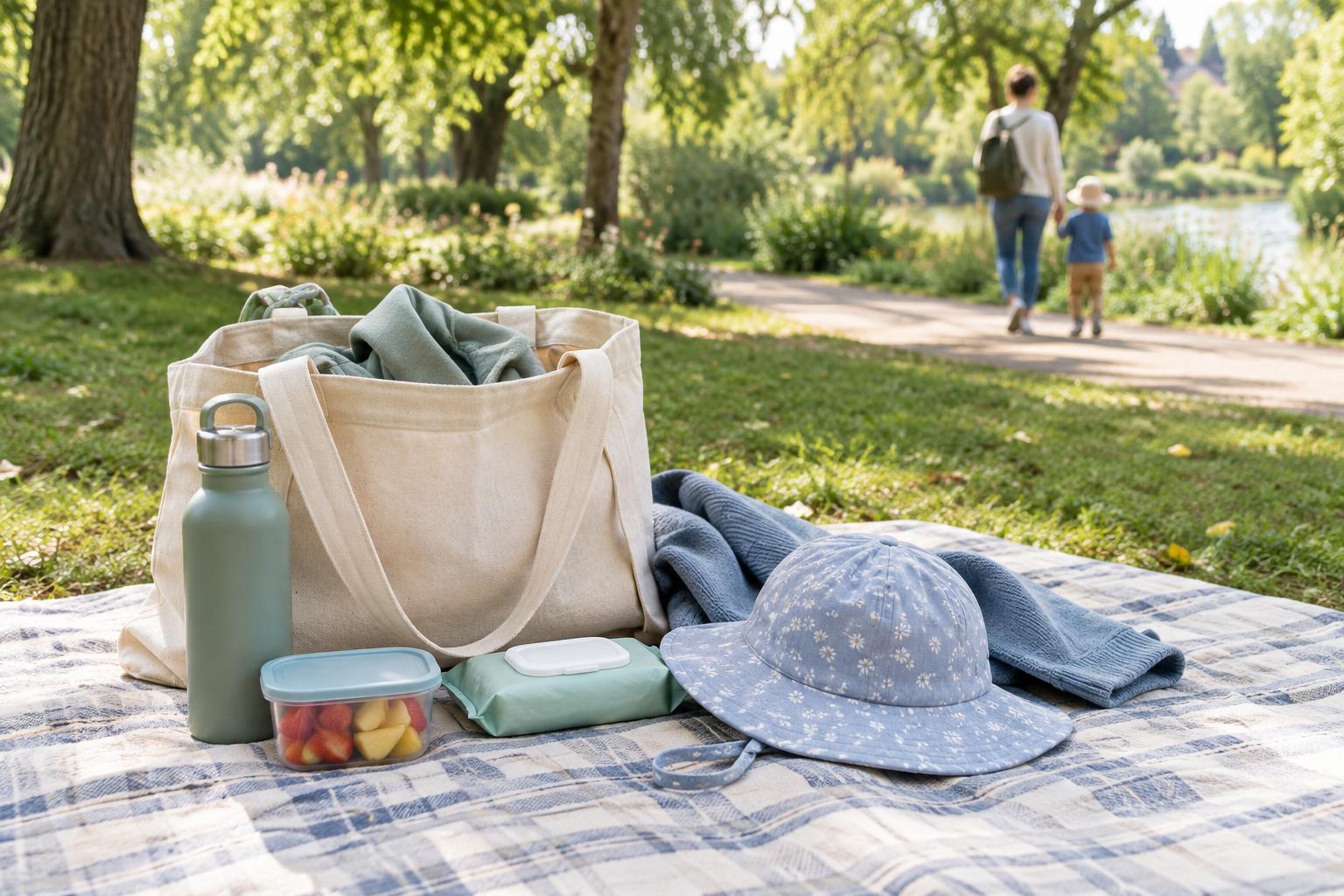
Water is a useful starting point, especially when children may be running or the weather feels warm. Bring drinking containers your children can manage, plus one for yourself. If you expect to be out around snack time, pack familiar, easy-to-carry food in portions that suit your children’s ages. Food that can be eaten while sitting together is often less distracting than something they must carry through play. Check the park’s rules and take wrappers and leftovers home if bins are not available.
A few cleanup supplies earn their space in a park bag: tissues, wipes or a cloth, and a small bag for damp clothes or rubbish. You may also want hand-cleaning supplies if there is no convenient place to wash hands before eating. These items are helpful after a muddy slide, a spilled drink or a snack eaten at a picnic table. They do not have to turn the bag into a full household supply cupboard.
Dress for the ground and the weather
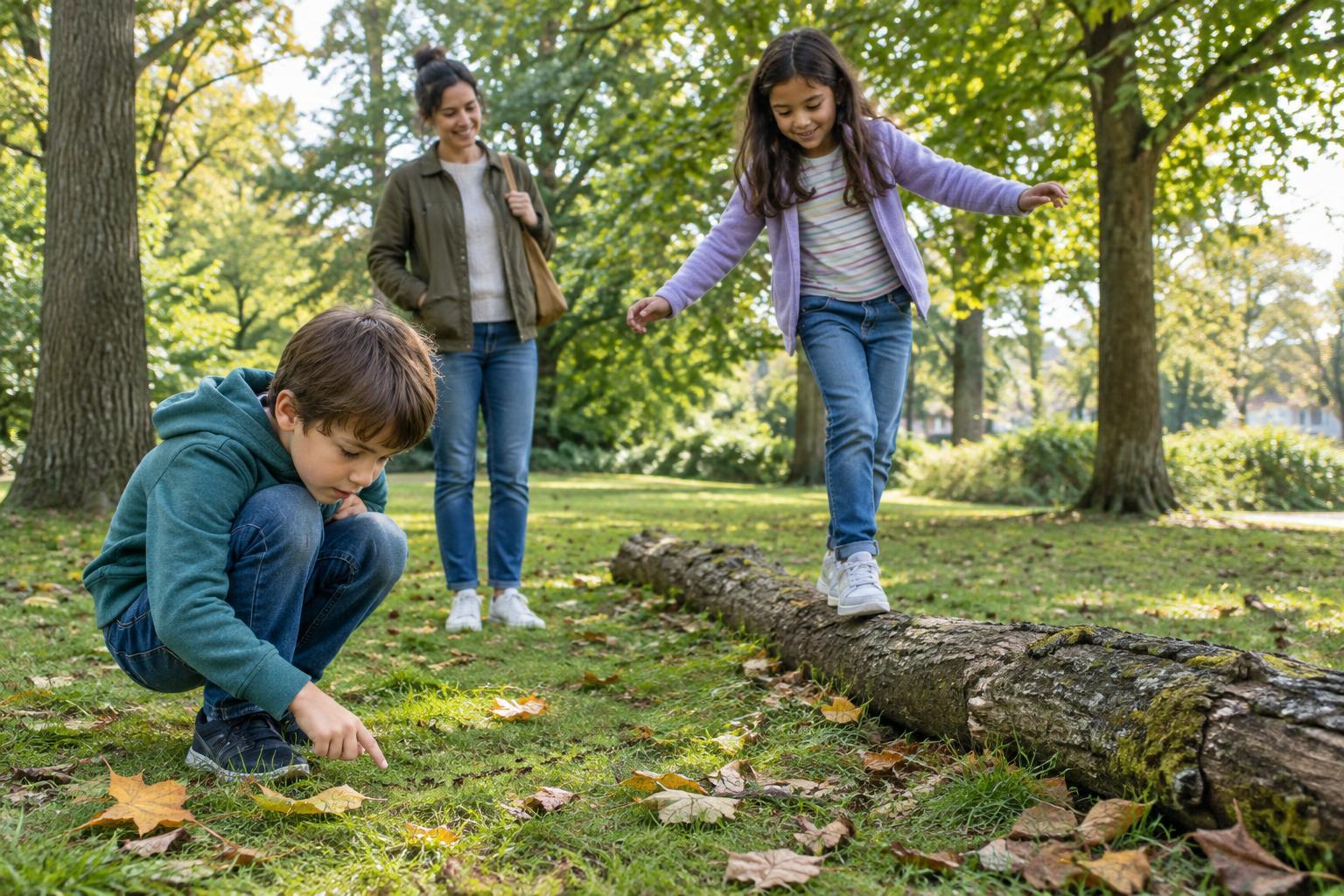
Think about what children will touch as well as what the sky looks like. Playgrounds can have damp grass, dusty paths and surfaces that feel different in sun and shade. Comfortable shoes suited to walking and climbing, along with clothes that can tolerate a little dirt, make it easier to say yes to ordinary play. A lightweight spare layer may help when the weather changes or a child slows down after running.
For sunnier outings, consider hats and a plan for breaks in the shade. For cooler or wet conditions, a suitable outer layer and a spare pair of socks may be more useful than extra toys. If your child is likely to enjoy puddles, decide before leaving whether that is part of today’s visit and dress accordingly. Packing one change of clothes can be worthwhile for a child who often gets wet or muddy, but it need not be a default for every short trip.
Add age-aware extras, not a bag full of toys
Babies and younger toddlers may need nappies or diapers, changing supplies and a spare outfit. A stroller or carrier, if your family uses one, can also shape what you bring and how much you can comfortably carry. For children learning to use a toilet, consider where the nearest facilities are before you leave. Older children may be able to carry their own water bottle or a small backpack, giving them a manageable part in getting ready.
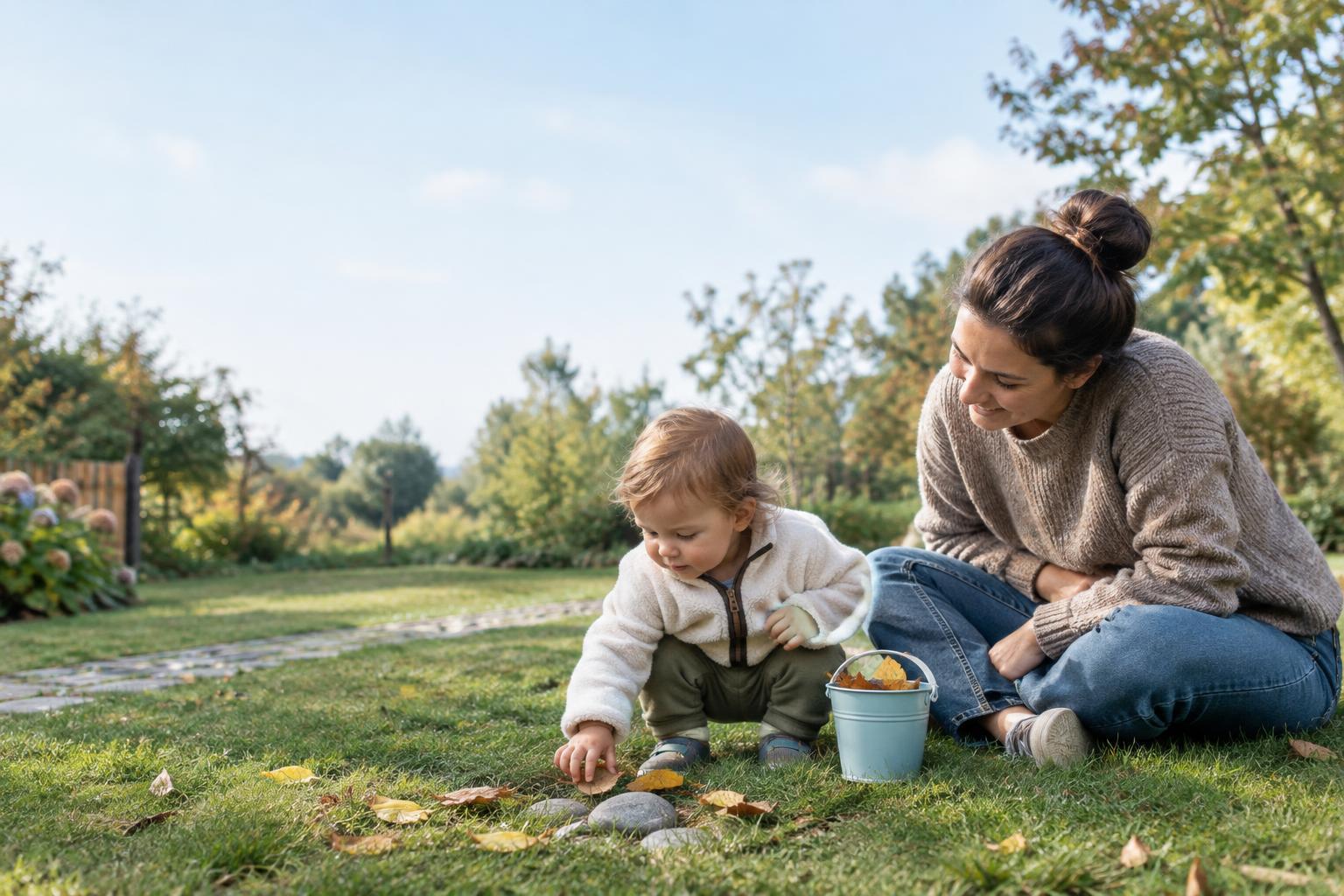
Park equipment, paths and natural objects already offer plenty to explore. If you want to bring something for play, choose one or two flexible items: a ball for an open space, a small bucket for collecting fallen treasures where permitted, or a notebook for drawing what children notice. Match the item to the park and the people sharing it. A ball may be welcome in a field but awkward beside a crowded play structure.
Make the return home easier
Before setting off, check that you have what you need to get home, such as keys, a phone and any travel items your family uses. Tell children where the bag will stay so water and snacks are easy to find. If you visit a busy park, agree on a simple meeting spot and expectations for staying within sight, in language each child understands.
When the outing ends, take a moment to gather belongings together rather than searching for them after everyone is tired. At home, remove rubbish and damp items, wash reusable containers and replace supplies that ran out. Over a few visits, you will learn which things you regularly use and which ones never leave the bag. That is the most practical packing list: one that helps your family spend more time enjoying the park and less time managing what you carried there.